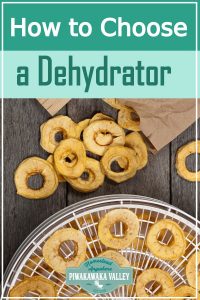
If I could only keep one food-preserving appliance after my freezer, it would probably be my dehydrator.
We use ours constantly throughout the year. Herbs from the garden, apples in autumn, mushrooms from the bush, tomatoes, chillies, onions, fruit leather for the kids, homemade soup vegetables and plenty of jerky all end up in it.
Before I owned a dehydrator, I tried drying food in the oven. While it works in a pinch, it simply doesn’t compare. Ovens generally run hotter than ideal for dehydrating, often don’t circulate air evenly, and use considerably more electricity over long drying times.
A good dehydrator quietly works away overnight while you sleep, turning fresh produce into shelf-stable food that can last for months—or even years when stored correctly.
Please read: This information is provided for educational purposes only and is not intended to treat, diagnose or prevent any disease. We encourage you to make your own health care decisions in partnership with a qualified health care professional.
This post contains affiliate links, this means at no extra cost to you, we make a commission from sales. Please read our Disclosure Statement
If you’re trying to become more self-sufficient, reduce food waste or preserve your garden harvest, a quality food dehydrator is one of the best investments you can make.
Quick Answer
The best food dehydrator for most homesteads is one with a rear-mounted fan, adjustable temperature control, a built-in timer and enough tray space to handle large harvests. Budget dehydrators work perfectly well for herbs and occasional batches, but if you regularly preserve fruit, vegetables, mushrooms or jerky, a larger front-loading dehydrator will save you time and produce more consistent results.
Table of Contents
- Why Buy a Food Dehydrator?
- Dehydrator vs Oven
- What Can You Dehydrate?
- What Features Matter?
- Our Favourite Dehydrators
- Which Dehydrator Should You Buy?
- Frequently Asked Questions
Why Every Homestead Needs a Food Dehydrator
One of the biggest challenges on a productive homestead is dealing with gluts. One week there are only a handful of tomatoes, and the next there are buckets full that all ripen at once.
A dehydrator allows you to preserve that abundance quickly and with very little effort.
Unlike freezing, dehydrating doesn’t rely on expensive freezer space or electricity once the food has been stored. Properly dried food becomes lightweight, compact and keeps for months when stored in airtight containers.
Over the years we’ve used our dehydrator to preserve:
- Tomatoes
- Apples
- Pears
- Mushrooms
- Fresh herbs
- Garlic
- Onions
- Capsicum
- Chillies
- Fruit leather
- Beef and venison jerky
- Soup vegetables
- Dog treats
Instead of throwing away surplus produce or watching it spoil in the fridge, you can enjoy your harvest all year round.
Is a Dehydrator Better Than an Oven?
Technically you can dry food in most ovens, and for occasional use it’s a perfectly reasonable option.
However, ovens simply aren’t designed for dehydrating.
| Food Dehydrator | Conventional Oven |
|---|---|
| Low temperatures designed for drying | Usually runs hotter than ideal |
| Continuous airflow | Limited airflow |
| Even drying | Can cook edges before centre dries |
| Uses less electricity | Higher energy consumption |
| Can safely run overnight | Not ideal for overnight use |
If you only dehydrate once or twice each year, your oven may be sufficient. If you preserve food regularly, you’ll quickly appreciate the consistency and convenience of a dedicated dehydrator.
What Can You Dehydrate?
Most people think of apple rings or beef jerky, but dehydrators are surprisingly versatile.
Fruit
- Apples
- Pears
- Bananas
- Peaches
- Apricots
- Plums
- Strawberries
- Blueberries
- Kiwifruit
- Citrus slices
Vegetables
- Tomatoes
- Carrots
- Sweetcorn
- Pumpkin
- Capsicum
- Onions
- Garlic
- Beans
- Peas
- Celery
Herbs
- Parsley
- Rosemary
- Thyme
- Oregano
- Mint
- Basil
- Sage
Meat & Protein
- Beef jerky
- Venison jerky
- Fish
- Chicken treats for pets
Other Uses
- Fruit leather
- Mushrooms
- Flower petals
- Yoghurt
- Sourdough starter
- Drying seeds
Recommended Dehydrating Temperatures
| Food | Recommended Temperature |
|---|---|
| Herbs | 35°C |
| Flowers | 35°C |
| Mushrooms | 45–50°C |
| Vegetables | 50–55°C |
| Fruit | 55–60°C |
| Fruit Leather | 60°C |
| Jerky | 70°C |
What Features Matter When Buying a Dehydrator?
There are dozens of dehydrators available, ranging from inexpensive plastic models through to large commercial stainless-steel machines.
These are the features I think are worth paying for.
Rear-Mounted Fan
A rear-mounted fan gives the most even airflow and usually eliminates the need to rotate trays during drying.
Adjustable Temperature
Different foods dry best at different temperatures. Herbs require much lower temperatures than jerky, so adjustable controls are essential.
Built-in Timer
A timer lets you load the dehydrator before bed or before heading to work, knowing it will automatically switch off once drying is complete.
Front Loading
Front-loading dehydrators with slide-out trays are much easier to load, inspect and unload than stackable round dehydrators.
Stainless Steel Trays
Plastic trays work perfectly well, but stainless steel lasts much longer, is easier to clean and won’t become brittle with age.
Capacity
If you’re preserving an entire garden harvest, buying the biggest dehydrator you can comfortably afford is rarely a mistake.
Small dehydrators soon become frustrating when you’re trying to process kilograms of tomatoes or apples.
Our Favourite Food Dehydrators
Below are the dehydrators I’d recommend depending on your budget, the amount of food you preserve and how often you expect to use your machine.
Every homestead is different. Someone preserving a few herbs each month has very different needs from a family processing hundreds of kilograms of fruit and vegetables each year.
Best Entry-Level Food Dehydrator
NZ – Living and Co dehydrator from the Warehouse.
What I Like
- Affordable price.
- Easy to use.
- Expandable tray system.
- Good airflow.
- Reliable brand.
- Timer and adjustable temperatures 40-70C
Things to Consider
- Plastic trays.
- Needs tray rotation for larger loads.
Bottom line: A great first dehydrator that offers excellent value without spending a fortune, comes with the warehouse’s 2 month guarantee .
USA – NESCO Snackmaster Pro
Best for: Beginners, occasional users and small households.
If you’ve never owned a dehydrator before, the NESCO Snackmaster is an excellent place to start. It has been around for years, has a great reputation and produces consistently good results for the price.
It isn’t designed for huge harvests, but it’s ideal for drying herbs, fruit, mushrooms and occasional batches of jerky.
What I Like
- Affordable price.
- Easy to use.
- Expandable tray system.
- Good airflow.
- Reliable brand.
Things to Consider
- No timer.
- Plastic trays.
- Needs tray rotation for larger loads.
Bottom line: A great first dehydrator that offers excellent value without spending a fortune.
Best Dehydrator for Jerky
Homdox Food Dehydrator or in NZ Benchfoods 10
Best for: Hunters, anglers and people who regularly make jerky.
If your main goal is producing homemade jerky, this dehydrator offers plenty of drying space together with adjustable temperatures and a timer.
It also works well for mushrooms and vegetables, making it a versatile mid-sized machine.
What I Like
- Good capacity.
- Quiet operation.
- Adjustable thermostat.
- Digital timer.
- Simple controls.
Things to Consider
- Plastic trays. (Benchfoods are stainless steel)
- Instructions are fairly basic.
Bottom line: An excellent option if jerky is one of your main reasons for buying a dehydrator.
Best All-Round Affordable Food Dehydrator
Ivation / Sunbeam Food Lab
Best for: Most homesteads.
Available in NZ from Briscoes
This is still the dehydrator I own, and after years of use I’d happily recommend it to anyone wanting a dependable machine without paying premium prices.
It strikes an excellent balance between capacity, ease of use, price and performance.
We’ve used ours for fruit leather, herbs, mushrooms, tomatoes, onions, apples and plenty of jerky, often running overnight using the built-in timer.
What I Like
- Rear-mounted fan.
- Excellent airflow.
- Even drying.
- Digital timer.
- Adjustable temperature.
- Simple to clean.
- Reliable.
Things to Consider
- Plastic trays.
- Temperature adjustments are in fixed increments.
Bottom line: If someone asked me which dehydrator I’d buy today for a typical homestead, this would still be my recommendation.
Best Large Capacity Dehydrator
Magic Mill Commercial Pro
Best for: Large gardens, orchards and busy families.
Once you begin growing lots of your own food you’ll quickly discover how fast a small dehydrator fills up.
The Magic Mill solves that problem with 7 large trays and a stainless-steel cabinet that allows huge quantities of food to be processed at once.
If you regularly harvest buckets of tomatoes, apples or mushrooms, this extra capacity can save hours of work.
What I Like
- Large drying capacity.
- Stainless-steel construction.
- Rear-mounted fan.
- Very quiet.
- No tray rotation required.
- Excellent airflow.
Things to Consider
- Takes up more bench space.
- Higher purchase price.
Bottom line: Fantastic for serious food preservation without reaching commercial prices.
Best Premium Dehydrator
Excalibur 10 Tray Stainless steel
Best for: Serious homesteaders and people preserving food year-round.
The Excalibur has earned an almost legendary reputation among homesteaders, and for good reason.
Its rear-mounted fan delivers exceptionally even drying, the stainless-steel trays are built to last, and the generous drying space makes preserving large harvests remarkably easy.
If dehydrating is going to become a regular part of your homestead routine, this is the machine many people eventually aspire to own.
What I Like
- Exceptional build quality.
- Huge capacity.
- Stainless-steel trays.
- Rear-mounted fan.
- No tray rotation.
- Long warranty.
- Excellent resale value.
Things to Consider
- Premium price.
- Larger footprint.
Bottom line: Expensive—but if you preserve food every week, it’s likely to be the last dehydrator you’ll ever need to buy.
Which Dehydrator Should You Buy?
If you’re still undecided, here’s a simple guide.
| If You… | Recommended Dehydrator |
|---|---|
| Have never owned a dehydrator before | NESCO Snackmaster or Living n Co |
| Mainly make jerky | Homdox or Benchfoods |
| Want the best all-round value | Ivation / Sunbeam |
| Grow a large vegetable garden | Magic Mill |
| Want the very best available | Excalibur |
How Much Electricity Does a Food Dehydrator Use?
One of the questions I’m asked most often is whether dehydrators are expensive to run.
The good news is that they’re surprisingly economical.
Most home dehydrators use somewhere between 400 and 700 watts, with larger commercial-style models using closer to 1,000 watts.
Although they often run for 8–12 hours, they still use considerably less electricity than running a conventional oven for the same amount of time.
Considering the amount of food they preserve, I think they’re one of the most economical kitchen appliances a homestead can own.
Frequently Asked Questions
Are food dehydrators worth buying?
If you regularly grow your own fruit and vegetables, absolutely.
A dehydrator allows you to preserve surplus produce that might otherwise spoil. Instead of throwing away excess tomatoes, apples or herbs, you can turn them into shelf-stable food that lasts for months.
We’ve found ours pays for itself surprisingly quickly, simply by reducing food waste and allowing us to preserve far more of our harvest.
Can I use my oven instead of a dehydrator?
Yes, but it isn’t ideal.
Most ovens run hotter than the temperatures needed for dehydrating, even on their lowest setting. They also don’t provide the continuous airflow that removes moisture efficiently.
If you only dehydrate occasionally, an oven will work. If you preserve food regularly, a dedicated dehydrator is well worth the investment.
Do food dehydrators use much electricity?
Most home dehydrators use between 400 and 700 watts, making them surprisingly economical to run. Even though they often operate for several hours, they generally consume much less electricity than running a conventional oven for the same length of time.
Is a rear-mounted fan really better?
In my experience, yes.
Rear-mounted fans distribute warm air much more evenly across every tray, meaning food dries more consistently and usually doesn’t require tray rotation.
Top-mounted and bottom-mounted fans still work perfectly well, but they often dry unevenly when the dehydrator is completely full.
Should I buy stainless steel or plastic trays?
Plastic trays are perfectly adequate for most people and help keep the purchase price lower.
However, if you plan to use your dehydrator frequently for many years, stainless-steel trays are usually worth the extra investment. They’re stronger, easier to clean and won’t become brittle with age.
Can you dehydrate raw meat?
Yes, but it must be prepared correctly.
Jerky should always be made following recognised food safety guidelines, including using the correct temperatures and safe handling practices to minimise the risk of harmful bacteria.
How long does dehydrated food last?
When fully dried and stored in airtight containers away from heat, light and moisture, many dehydrated foods will last between six months and several years.
Vacuum sealing and using oxygen absorbers can significantly extend storage life.
What foods don’t dehydrate well?
Foods that contain a lot of fat, such as avocado, cheese or fatty cuts of meat, generally don’t store well after dehydrating because fats can become rancid over time.
Very watery vegetables like lettuce also don’t produce particularly useful results.
Can you over-dry food?
Most fruits and vegetables are difficult to over-dry, although herbs can lose some of their aroma if left for excessively long periods.
The biggest problem is usually under-drying rather than over-drying, as remaining moisture can encourage mould during storage.
Should dehydrated food be refrigerated?
Most properly dehydrated foods don’t require refrigeration.
Store them in airtight jars or vacuum-sealed bags somewhere cool, dark and dry for the longest shelf life.
Final Thoughts
Choosing the best dehydrator really comes down to how much food you plan to preserve.
If you’re only drying herbs from time to time, a small entry-level dehydrator will probably do everything you need.
If, however, you’re growing a productive vegetable garden, harvesting fruit trees or aiming to become more self-sufficient, you’ll almost certainly appreciate the extra capacity, convenience and durability of a larger front-loading dehydrator.
After using dehydrators for many years, the features I value most are a rear-mounted fan, adjustable temperature controls, a timer and enough tray space that I don’t have to process my harvest in multiple batches.
Whatever model you choose, a good dehydrator quickly becomes one of those appliances you wonder how you ever managed without.
From preserving herbs and mushrooms to making homemade jerky, fruit leather and dried vegetables for soups, it’s one of the simplest ways to reduce waste, save money and enjoy your harvest all year round.
Our Overall Recommendation
For most homesteads, I’d recommend choosing a medium-sized front-loading dehydrator with adjustable temperature controls and a timer.
It offers the best balance between affordability, ease of use and capacity, and will comfortably handle everything from herbs and fruit to jerky and large garden harvests.
While premium stainless-steel dehydrators are a wonderful investment if you preserve food every week, many families will find a quality mid-range machine provides everything they need for years to come.
Whichever model you choose, learning to preserve your own food is one of the most rewarding skills you can develop on a homestead—and a good dehydrator makes that job easier than ever.
Related Articles
- How to Dehydrate Food Without a Dehydrator
- How to Make Beef and Venison Jerky at Home
- Easy Homemade Fruit Leather
- How to Store Food Long Term
- Food Preservation Methods Every Homesteader Should Know
There are many things on the homestead that you can use a dehydrator for. Before I owned a dehydrator, I used to use the oven for anything that I needed to dry out, but an oven really isn’t the same as a dehydrator. I have decided to review the 5 best dehydrators.
The difference between drying in an oven and using a dehydrator
Ovens generally have a higher minimum temperature than what you want to dehydrate food at for optimal quality.
If you are like me and you own an older oven without a fan forced option, they are even worse as the food will definitely cook before they dry.
To dry food properly you need to keep the temperature as low as required, a fan to blow off the moisture, and plenty of ventilation to let the moisture out.
While you CAN manage this in an oven (sort of) you will get a much more consistent and better product if you have a properly designed dehydrator.
RELATED: Dehydrating without a dehydrator
My Favorite Dehydrator
Of the 5 dehydrators that I reviewed, for the price, functionality and size I would recommend this dehydrator – if you live in NZ this is the same one under a NZ label.
I dream of having one of the larger, more sturdy stainless steel dehydrators, but for all the things we dehydrate, the one we have works just fine for our needs.
I dry vegetables, fruit leather and jerky overnight using the auto timer cut off and have used it to dry herbs and mushrooms with great success too.
What to look for when choosing a dehydrator
The choice of dehydrator models is vast, and so are the specs and the resulting price range. What do you look for in a dehydrator, and how do you decide which is best for you?
I have used a fair share of dehydrators over the years, and I can tell you, if you plan on using one regularly, it is worth getting one that will do what you need easily and well.
Does the size of the dehydrator matter?
The smaller, cheaper dehydrators are great if you occasionally have something to dry and they work particularly well with small batches of herbs or plants. If you are planning on drying your entire tomato harvest, use your dehydrator to make yogurt or other ferments or plan on making lots of fruit leather, you will be much better off getting one of the larger square shaped ones.
Metal trays or plastic trays in a dehydrator? Does it matter?
Most of the cheaper machines come with plastic trays which while they can be washed in the dishwasher, they will become brittle and break over time. Metal trays will last much longer and are not as likely to warp or buckle. Some of the more expensive ones will also come with fruit leather trays that are solid.
Top loading or front loading dehydrators?
Dehydrators that load from the top down are much more fiddly to load with liquids, and you are more likely to up-end your trays and drop stuff inside once it is dry. Ones that open at the front that have sliding trays are much easier to check on, and remove, add or rotate trays as required without unstacking the whole machine.
Wattage in dehydrators
The higher the wattage, the more power the machine will be using while it is on, however, the higher wattage machines will also dry more food and faster than the lower wattage machines.
Temperature adjustments
Different foods will dehydrate best at different temperatures, so it is best to choose a machine that has an adjustable temperature option.
Built in timers
Most foods will need to dehydrate for many many hours, and if you are like us, your power is cheaper overnight. So with a dehydrator with a timer built in, you can set it and forget it, knowing that it will turn itself off when it is done, which allows you to make use of the cheaper power at night, or to get some drying done while you are out of the house.
Fan position
A fan in the top or the bottom of the unit will have a less even drying effect than one that is in the back of the unit. For smaller batches this will be less of an issue, but if you are doing lots of drying, all the tray rotations will become annoying.