Quick Answer
Elderberry syrup is a traditional herbal remedy made by gently simmering elderberries with water, warming spices and honey. It has been used for centuries to support the immune system during cold and flu season. This recipe uses fresh elderberries, but can easily be adapted for dried berries. It also includes step-by-step instructions, storage advice, dosing information and important safety tips to help you make elderberry syrup confidently at home.
Why Make Your Own Elderberry Syrup?
Every autumn our elderberry bushes become loaded with clusters of deep purple berries. While many people simply admire the berries before the birds eat them, we’ve come to look forward to harvest time because it means another batch of homemade elderberry syrup.
Making your own syrup is surprisingly simple, costs a fraction of buying commercial products and allows you to control exactly what goes into it. Many store-bought elderberry syrups contain very little actual elderberry, relying instead on added sugars, flavourings or concentrates.
Please read: This information is provided for educational purposes only and is not intended to treat, diagnose or prevent any disease. We encourage you to make your own health care decisions in partnership with a qualified health care professional.
This post contains affiliate links, this means at no extra cost to you, we make a commission from sales. Please read our Disclosure Statement
When you make your own, you know you’re getting a rich, concentrated syrup made from real berries.
It’s also a wonderful way to preserve your elderberry harvest and have a bottle ready whenever cold and flu season arrives.
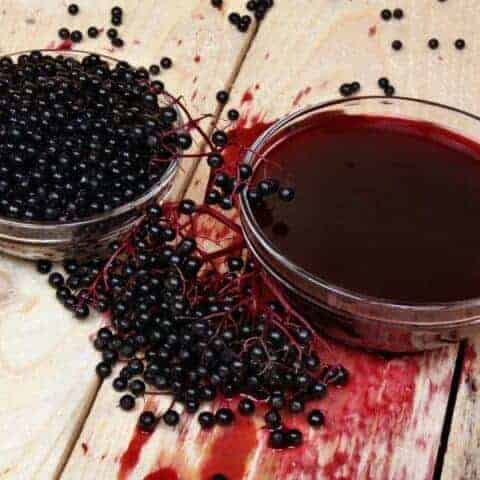
Elderberry syrup using fresh elderberries
Delicious elderberry syrup made with fresh elderberries
Ingredients
- 500g fresh elderberries (or 100g of dried plus additional 400 ml water)
- 3 cups / 750 ml of water
- 12g or 2 Tablespoons of dried ginger root
- 2g or 1 teaspoon ground cloves
- 1 1/2 cups of honey (or brown rice syrup) or 1 cup of honey and 1/2 cup of sugar
Instructions
In a pot on the stove boil your elderberries, water, and spices for 30 minutes. Mash the berries to release their juices and stir them regularly during this time.
Tip the berries into a sieve over a bowl and use the back of a ladle to squish out all the liquid as best that you can.
Measure this liquid and if required top it up to 2 cups with additional water
Return the liquid to the pot and add the honey
Boil for a further 10 to 15 minutes or until it has reduced back down to 2 cups of liquid.
While it is boiling, place clean glass bottles in the oven at 100C (40F) for 10 minutes to get hot and sterilised and boil your lids for 5 minutes.
Use a funnel pour your liquid in to the hot bottles and add their lids.
If you want this mixture to be shelf stable for more than a month then you should waterbath them by filling a tall pot with enough water to cover the bottles plus an inch, place a rack in the bottom of the pot and bring it to the boil.
Carefully add your hot bottles and simmer them for 15 minutes
Store open bottles in the fridge.
Notes
It is important that this syrup is cooked for at least 30 minutes in the first boil. Depending on altitude, humidity and other factors, 3 cups/750ml of water may not be enough to cook for the required length of time without burning the berries.
Adjust the initial water measurement as needed to ensure that the final result is 2 cups of extract per 500g of fresh elderberries after having been cooked for 30-45 minutes and thoroughly strained.
Contents
- Why Make Your Own Elderberry Syrup?
- What Is Elderberry Syrup?
- Can You Use Fresh Elderberries Instead of Dried?
- Fresh vs Dried Elderberries
- What Are the Benefits of Elderberry Syrup?
- Is Elderberry Safe?
- Why Are Raw Elderberries Unsafe?
- Who Should Avoid Elderberry Syrup?
- Does Elderberry Really Help With Colds and Flu?
- Can You Take Elderberry Syrup Every Day?
- How Much Elderberry Syrup Should You Take?
- How to Make Elderberry Syrup (Step-by-Step)
- Printable Recipe Card
- How to Harvest Elderberries
- Can You Use Frozen Elderberries?
- Can You Dry Your Own Elderberries?
- Can You Freeze Elderberry Syrup?
- How Long Does Elderberry Syrup Last?
- Can You Water Bath Can Elderberry Syrup?
- Can You Make Elderberry Syrup Without Honey?
- Delicious Variations
- Troubleshooting Elderberry Syrup
- Frequently Asked Questions
- My Favourite Tips
- Final Thoughts
What Is Elderberry Syrup?
Elderberry syrup is made by slowly simmering ripe elderberries with water until the berries release their colour, flavour and naturally occurring plant compounds. The berries are then strained before honey (or another sweetener) is added to create a thick, pleasantly sweet syrup.
Many recipes also include warming spices such as ginger, cinnamon and cloves. These spices have traditionally been used alongside elderberries for generations and complement the flavour beautifully.
The finished syrup can be taken by the spoonful, stirred into warm drinks or drizzled over pancakes, yoghurt or porridge.
Can You Use Fresh Elderberries Instead of Dried?
Yes—you absolutely can.
In fact, if you have access to an elderberry bush, using freshly picked berries is one of the most economical ways to make elderberry syrup.
The main difference is water content.
Fresh elderberries contain around 80% water, while dried elderberries have already had most of that moisture removed.
That means you’ll need approximately five times as many fresh berries as dried berries to achieve the same concentration.
Fortunately, the conversion is quite straightforward.
RELATED POST: how to dry your own elderberries
Fresh Elderberry Conversion Chart
| Dried Elderberries | Fresh Elderberries |
|---|---|
| 25 g | 125 g |
| 50 g | 250 g |
| 75 g | 375 g |
| 100 g | 500 g |
| 150 g | 750 g |
You’ll also need to reduce the amount of water in the recipe to account for the extra moisture already contained in the fresh berries.
Thankfully, the recipe below has already been adjusted, so if you’re using fresh elderberries there’s no need to do any calculations.
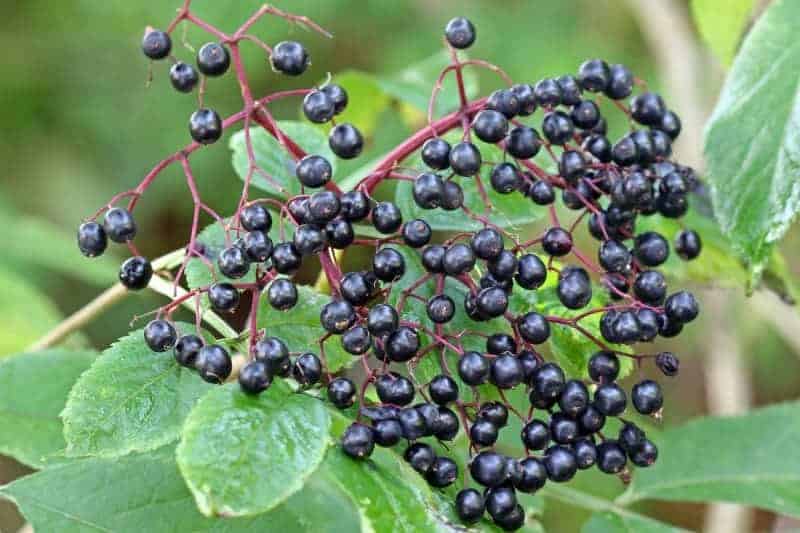
Fresh vs Dried Elderberries
| Fresh Elderberries | Dried Elderberries |
|---|---|
| Best if you grow your own bushes. | Available year-round. |
| Need picking and destemming. | Ready to use immediately. |
| Contain around 80% water. | Highly concentrated. |
| Require less added water. | Require more water during cooking. |
| Excellent flavour. | Long shelf life. |
Both produce an excellent syrup. If elderberries grow locally where you live, fresh berries are hard to beat. Otherwise, quality dried elderberries are a convenient alternative.
What Are the Benefits of Elderberry Syrup?
Elderberries (Sambucus nigra) have been used in traditional herbal medicine throughout Europe for hundreds of years. More recently, they have attracted scientific interest because they contain naturally occurring anthocyanins, flavonoids and other antioxidant compounds.
Several clinical studies have investigated elderberry preparations for respiratory illnesses, particularly influenza. Some research suggests elderberry extracts may help reduce the duration of cold and flu symptoms when taken early in the illness.
Researchers believe elderberries may work in several different ways, including:
- Providing antioxidant compounds that help protect cells from oxidative stress.
- Supporting normal immune system function.
- Helping reduce viral attachment to cells in laboratory studies.
- Reducing the severity or duration of some upper respiratory symptoms in certain studies.
While these findings are promising, elderberry syrup should not be considered a replacement for medical treatment or vaccination where appropriate.
Think of elderberry syrup as one tool that may support overall wellness alongside adequate sleep, nutritious food, hydration and good hygiene.
Elderberry syrup has been shown in clinical studies to both block the entry of the influenza virus in to the cell, and also once it is there, inhibit the virus from replicating. (1, 2)
In practice they found in a several double blind trials that taking the correct dose of elderberry syrup also reduce the length of the flu by 4 days on average. (1, 2 , 3)
Which Elderberries Can You Use?
Not every elderberry species should be used in the kitchen.
The species most commonly used for syrups, jams and wines is the European black elder (Sambucus nigra), although several closely related species are also traditionally used around the world.
Always identify your plant carefully before harvesting, and only pick fully ripe, dark purple or black berries.
Avoid green, unripe berries, as well as the leaves, bark and stems, which contain much higher concentrations of naturally occurring compounds that can cause stomach upset if eaten raw.
Is Elderberry Safe?
This is one of the most common questions people ask about elderberries, and it’s a good one.
The short answer is yes—when prepared correctly.
Cooked elderberries have been eaten safely for centuries in syrups, jams, pies, wines and cordials throughout Europe and many other parts of the world.
However, raw elderberries and other parts of the elder plant contain naturally occurring compounds that can cause nausea, vomiting and stomach upset if eaten in sufficient quantities.
Fortunately, these compounds are greatly reduced during cooking, which is why elderberry syrup is always made by simmering the berries before they are consumed.
As with many traditional foods, correct preparation makes all the difference.
Why Are Raw Elderberries Considered Unsafe?
The leaves, stems, bark, roots and unripe berries of the elder plant contain naturally occurring compounds called cyanogenic glycosides, particularly one known as sambunigrin.
When plant tissue is damaged or digested, these compounds can release small amounts of cyanide.
Fortunately, sambunigrin is unstable and is largely broken down by heat during cooking.
The ripe berry flesh contains much lower concentrations than the leaves, stems and bark, but because small stem fragments are often attached to harvested berries, it’s good practice to remove as many stems as possible before cooking.
Raw elderberries also contain naturally occurring compounds that may irritate the stomach in some people.
Cooking the berries before making syrup significantly reduces these compounds, making the finished syrup much safer to consume.
Should You Remove Every Tiny Stem?
One question that comes up frequently is whether every tiny green stem must be removed.
While it’s sensible to remove the larger stems, don’t worry if a few tiny stalks remain attached to the berries.
Trying to remove every microscopic stem can take hours and usually isn’t necessary, particularly since the berries will be simmered before use.
Many people find freezing the berry clusters first makes the berries much easier to remove from the stems using a fork.
Who Should Avoid Elderberry Syrup?
Although elderberry syrup is considered safe for most healthy adults when prepared correctly, it isn’t suitable for everyone.
You should speak with your healthcare provider before using elderberry preparations if you:
- Are pregnant or breastfeeding.
- Take medications that suppress the immune system.
- Have recently received an organ transplant.
- Have an autoimmune condition.
- Are taking prescription diuretics.
- Have concerns about interactions with other medications.
Because elderberry may influence immune activity, some healthcare professionals recommend avoiding medicinal doses alongside immune-suppressing medications unless advised otherwise by your doctor.
If you’re unsure whether elderberry is appropriate for you, it’s always worth seeking personalised medical advice.
Does Elderberry Really Help With Colds and Flu?
Elderberry has become incredibly popular over the past decade, but unlike many herbal remedies, it has actually been studied in several clinical trials.
Research has investigated elderberry extracts for influenza and upper respiratory infections, with several studies reporting that participants taking elderberry preparations experienced shorter illness duration or reduced symptom severity compared with placebo.
Scientists believe this may be related to the berry’s naturally occurring anthocyanins and other plant compounds, although the exact mechanisms are still being investigated.
It’s important to remember that these studies have generally used standardised commercial extracts or syrups rather than homemade preparations.
While homemade elderberry syrup has a long history of traditional use, it hasn’t been tested in exactly the same way.
For that reason, homemade elderberry syrup should be viewed as a traditional food and herbal preparation rather than a proven medical treatment.
Can You Take Elderberry Syrup Every Day?
Many people enjoy taking a small amount of elderberry syrup throughout winter as part of their normal routine.
Traditional daily use is generally much lower than the doses used during illness.
If you’re using elderberry syrup as a food or seasonal tonic, one small daily serving is commonly used.
Higher doses are generally reserved for short-term use during illness and should not be continued indefinitely without medical advice.
How Much Elderberry Syrup Should You Take?
There is no universally accepted dose for homemade elderberry syrup because recipes vary considerably in strength.
Commercial products often contain different concentrations of elderberry extract, making direct comparisons difficult.
The recipe on this page has been formulated to produce approximately 35 adult servings.
If your final syrup volume is around 500 ml, each adult serving will be approximately 15 ml (one tablespoon).
| Age | General Daily Serving* |
|---|---|
| Adults | 15 ml (1 tablespoon) |
| Children | 7.5 ml (1½ teaspoons) |
*These are traditional serving sizes only and are not intended as personalised medical advice.
Can You Take Elderberry Syrup When You’re Sick?
Some people choose to increase the frequency of elderberry syrup during a cold or flu, following the serving sizes used in some clinical studies.
If symptoms are severe, persistent or worsening, or if you have concerns about COVID-19, influenza or other respiratory illnesses, seek appropriate medical care rather than relying solely on herbal remedies.
Herbal preparations work best as part of an overall approach that includes adequate rest, hydration and medical care when required.
Common Elderberry Myths
Myth: Elderberry cures the flu.
No. Some research suggests elderberry preparations may reduce symptom duration in certain situations, but they are not a cure.
Myth: You can safely eat raw elderberries.
No. Raw elderberries may cause digestive upset and should always be cooked before eating.
Myth: Every part of the elder tree is edible.
No. Leaves, bark, roots and stems should not be eaten.
Myth: Homemade syrup works exactly like commercial extracts.
Not necessarily. Commercial products often contain standardised extracts with measured concentrations, while homemade syrups vary depending on the berries, recipe and cooking time.
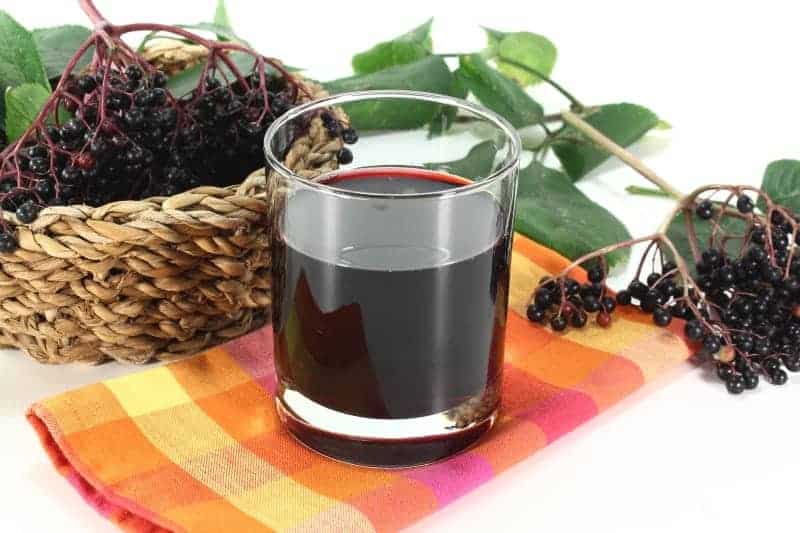
Why This Elderberry Syrup Recipe Works
There are hundreds of elderberry syrup recipes online, but not all of them produce the same strength, flavour or consistency.
This recipe has been carefully developed using fresh elderberries to produce a rich, concentrated syrup that’s simple enough for beginners while remaining true to traditional methods.
Here’s why it works so well:
- Fresh elderberries provide a vibrant flavour and beautiful deep purple colour.
- A long, gentle simmer extracts the maximum amount of juice and flavour from the berries.
- Ginger and cloves complement the elderberries without overpowering them.
- Honey is added after straining, giving the syrup a smooth, rich finish.
- The final reduction creates a concentrated syrup that stores well in the refrigerator.
The result is a syrup that’s rich, smooth and full of fresh elderberry flavour.
How to Harvest Elderberries
If you’re lucky enough to have your own elderberry bushes, harvesting them at the right stage makes a big difference to the finished syrup.
Only harvest berries that are fully ripe and have turned a deep purple-black colour.
Immature green berries should always be left on the plant as they are not suitable for eating.
Using secateurs, cut off the entire berry cluster rather than trying to pick individual berries from the bush.
This is much quicker and reduces damage to the fruit.
Top Tip
Place the whole berry clusters in the freezer for an hour or two before removing the berries.
Once frozen, simply run a fork down each stem and most of the berries will fall off in seconds.
This is far easier than trying to remove them while they’re fresh.
Can You Use Frozen Elderberries?
Yes.
Frozen elderberries work just as well as freshly picked berries.
In fact, many people deliberately freeze their harvest until they have enough berries to make a large batch of syrup.
Simply thaw the berries before cooking or add them directly to the saucepan and allow a few extra minutes for them to heat through.
Can You Dry Your Own Elderberries?
Absolutely.
If your bushes produce more berries than you can use immediately, drying them is an excellent way to preserve your harvest for future batches of syrup.
Properly dried elderberries can be stored in airtight containers for many months and are ready to use whenever you need them.
If you’d like to learn how, have a look at my complete guide on drying elderberries.
Can You Freeze Elderberry Syrup?
Yes—and freezing is one of the easiest ways to extend the shelf life of homemade elderberry syrup.
Allow the syrup to cool completely before pouring it into freezer-safe containers.
Leave a small amount of space at the top of each container to allow for expansion as the syrup freezes.
Ice cube trays are also a handy option if you’d like small individual portions that can be thawed as needed.
Frozen elderberry syrup keeps its flavour well for around 6 to 12 months.
How Long Does Homemade Elderberry Syrup Last?
The exact shelf life depends on how it’s stored.
| Storage Method | Approximate Shelf Life |
|---|---|
| Refrigerator | 2–3 months |
| Freezer | 6–12 months |
| Opened bottle | Keep refrigerated and use within a few weeks. |
Always use a clean spoon when serving your syrup and discard it if you notice mould, fermentation, an unusual smell or any other signs of spoilage.
Can You Water Bath Can Elderberry Syrup?
This is one of the most common questions I receive.
Some people successfully preserve elderberry syrup using a boiling water bath, while others prefer to refrigerate or freeze it.
The safest approach depends on the acidity of your finished recipe, the ingredients you’ve used and whether you’re following a tested canning recipe.
If you’re using an approved preserving recipe from a trusted canning authority, carefully follow their processing times and instructions.
Otherwise, storing your syrup in the refrigerator or freezer is the simplest and safest option.
Can You Make Elderberry Syrup Without Honey?
Yes.
Although honey is the traditional sweetener, there are several alternatives if you prefer not to use it.
- Maple syrup
- Brown rice syrup
- Raw sugar
- Coconut sugar
- White sugar
- Vegan honey alternatives
Each sweetener produces a slightly different flavour, but they all work well.
If making elderberry syrup for babies under 12 months old, remember that honey should not be given to infants because of the risk of infant botulism.
Delicious Variations
Once you’ve mastered the basic recipe, it’s easy to customise the flavour.
Popular additions include:
- Fresh ginger slices
- Cinnamon sticks
- Star anise
- Orange peel
- Lemon peel
- Rosehips
- Cardamom pods
- Fresh turmeric
If you’re adding medicinal herbs such as echinacea or astragalus, it’s worth checking for any potential interactions with medications before using them regularly.
Why Is My Elderberry Syrup Not Right?
My syrup is too thin.
Simply simmer it for a little longer until more water evaporates and the syrup reaches your preferred consistency.
My syrup is too thick.
Add a small amount of boiled water and stir until smooth.
My syrup tastes bitter.
This is usually caused by including too many stems or using unripe berries.
My syrup has mould growing on top.
Discard it immediately. Mould indicates spoilage and the syrup should not be consumed.
My syrup fermented.
Fermentation generally means wild yeasts have started growing, often because the syrup wasn’t refrigerated or the bottles weren’t properly sterilised.
There is sediment in the bottle.
A small amount of natural sediment is perfectly normal. Simply shake the bottle gently before use.
The Science Behind Elderberries
The deep purple colour of elderberries comes from natural plant pigments called anthocyanins.
These belong to a larger group of compounds known as flavonoids and act as antioxidants within the plant.
Scientists are interested in anthocyanins because they may help protect cells from oxidative stress and have been studied for a variety of potential health benefits.
Although research into elderberries continues, many of the traditional uses of elderberry syrup are now being explored through modern scientific studies.
Frequently Asked Questions
Can you eat raw elderberries?
No. Raw elderberries should not be eaten in large quantities because they contain naturally occurring compounds that can cause nausea, vomiting and stomach upset. Elderberries should always be cooked before making syrup, jam, jelly or other preserves.
Can you use frozen elderberries to make syrup?
Yes. Frozen elderberries work just as well as freshly picked berries. Simply thaw them first or allow a few extra minutes of cooking time if adding them to the saucepan while still frozen.
Can you use dried elderberries instead?
Absolutely. Dried elderberries make excellent syrup and are available year-round. Simply follow the fresh-to-dried conversion chart earlier in this article or use the quantities listed in the recipe.
Can you use red elderberries?
Only some elderberry species are traditionally used for food. Most homemade elderberry syrup recipes use black elderberries (Sambucus nigra). Always correctly identify your plant before harvesting and only use species known to be edible when cooked.
Can children take elderberry syrup?
Many families choose to give small amounts of elderberry syrup to older children. However, if your child has underlying health conditions or you’re unsure whether elderberry is appropriate, seek advice from your healthcare provider.
Can babies have elderberry syrup?
Honey should never be given to babies under 12 months of age because of the risk of infant botulism. If preparing elderberry syrup for older children, discuss appropriate ingredients and serving sizes with your healthcare professional.
Can you make elderberry syrup with less honey?
Yes. The amount of honey can be adjusted to suit your taste, although reducing it may slightly alter the flavour, consistency and keeping qualities of the finished syrup.
Does cooking destroy the beneficial compounds?
Cooking changes some naturally occurring plant compounds, but it also makes elderberries safe to consume. Traditional elderberry syrup has always been prepared using cooked berries.
Can you make elderberry syrup without sugar?
Yes. Some people sweeten their syrup entirely with honey, while others use maple syrup or another preferred sweetener. Keep in mind that changing the sweetener may alter both the flavour and shelf life.
Can you make elderberry syrup in a slow cooker?
Yes. A slow cooker works well because it gently heats the berries over several hours. Simply strain the berries once they’ve softened, then finish the syrup on the stovetop if you need to reduce it further.
Can you make elderberry syrup in an Instant Pot?
Yes. Many people use the sauté function followed by a short pressure cook before reducing the liquid with the lid removed. The exact method varies depending on the recipe.
Why isn’t my syrup thick?
Unlike commercial syrups, homemade elderberry syrup isn’t usually as thick because it doesn’t contain commercial thickeners. If you’d like a thicker consistency, simply simmer it for a little longer until more water has evaporated.
Should elderberry syrup be refrigerated?
Yes. Homemade elderberry syrup should be stored in the refrigerator unless you’ve prepared and processed it using a tested canning recipe.
Can dogs have elderberry syrup?
Although cooked elderberries are sometimes discussed for pets, you should never give herbal preparations to animals without first consulting your veterinarian.
Can I double the recipe?
Absolutely. This recipe scales up very well and is a great option if you have a bumper crop of elderberries. Just remember that larger batches may take longer to reduce.
Can I use powdered ginger instead of fresh?
Yes. Both work well. Ground ginger produces a slightly stronger, warmer flavour, while fresh ginger gives the syrup a brighter taste.
Can I leave out the cloves?
Certainly. Cloves add warmth and depth, but if you don’t enjoy their flavour you can reduce the quantity or omit them altogether.
Can I use this syrup in recipes?
Definitely. Elderberry syrup is delicious stirred through yoghurt, drizzled over pancakes, mixed into sparkling water, added to smoothies or used in desserts.
Why has my syrup separated?
Natural separation is completely normal, especially if you’ve used raw honey. Simply give the bottle a gentle shake before each use.
Can I forage elderberries?
Yes, provided you’re confident in correctly identifying the plant and only harvest from areas free of roadside pollution, chemical sprays and contamination.
My Favourite Tips for Making Elderberry Syrup
After making elderberry syrup for many years, these are the little tricks that have made the biggest difference.
- Harvest berries only when they’re fully ripe and almost black.
- Freeze berry clusters before removing them from the stems—it saves a huge amount of time.
- Mash the berries well during cooking to extract as much juice as possible.
- Use a potato masher or the back of a ladle when straining.
- Label every bottle with the date it was made.
- Freeze extra syrup in small containers so you always have some ready.
- Store bottles away from direct sunlight to help preserve their colour.
Final Thoughts
Making elderberry syrup is one of my favourite ways to preserve the autumn harvest.
It’s incredibly satisfying turning a bowl of fresh berries into beautiful bottles of deep purple syrup that can be enjoyed throughout winter.
Whether you make it because you appreciate traditional herbal remedies, enjoy preserving seasonal produce or simply love the rich berry flavour, homemade elderberry syrup is inexpensive, rewarding and surprisingly easy to prepare.
If you have an elderberry bush growing in your garden, I highly recommend giving this recipe a try. Once you’ve made your first batch, you’ll probably find yourself looking forward to elderberry season every year.
More Elderberry & Herbal Guides
- How to Dry Elderberries
- How to Propagate Elderberry Bushes
- Traditional New Zealand Lemon Honey Recipe
- Homemade Honey Lemon Syrup
- Natural Herbal Cough Syrup
Love Homemade Preserves?
If you enjoy making traditional recipes from scratch, be sure to explore the rest of our preserving guides. From drying herbs and preserving fruit to making jams, syrups and pantry staples, you’ll find plenty of practical tutorials to help you make the most of your harvest throughout the year.