After finally buying our dream farm, I imagined spending the next few years building healthy, fertile soil and growing abundant vegetables.
Instead, I discovered something I hadn’t expected.
The property had previously been treated with persistent broadleaf herbicides.
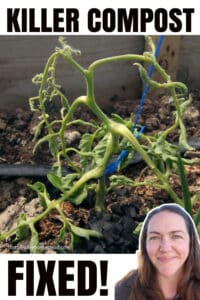
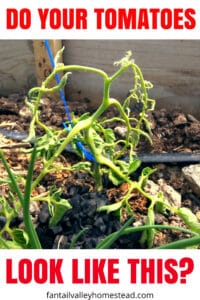
The result was disappointing. Many of the plants we expected to thrive struggled, sensitive vegetables became distorted and it quickly became obvious that something was badly wrong with the soil.
Please read: This information is provided for educational purposes only and is not intended to treat, diagnose or prevent any disease. We encourage you to make your own health care decisions in partnership with a qualified health care professional.
This post contains affiliate links, this means at no extra cost to you, we make a commission from sales. Please read our Disclosure Statement
If you’ve landed here because your tomatoes have twisted leaves, your beans won’t grow or you’ve accidentally spread contaminated compost or manure through your vegetable garden, you’re certainly not alone.
The encouraging news is that contaminated soil can recover. It usually isn’t quick, but with patience and the right management practices you can help the process along.
Quick Answer
Persistent herbicides such as aminopyralid, clopyralid and picloram cannot usually be removed instantly. Recovery depends on encouraging healthy soil biology, maintaining moisture, adding trusted organic matter, avoiding further contamination and giving soil microbes time to break the herbicide down naturally.
Contents
How Does Soil Become Contaminated with Persistent Herbicides?
Many gardeners assume contamination only happens if someone sprays herbicide directly onto the vegetable garden.
In reality, that’s only one of several possible pathways.
Persistent herbicides often travel surprisingly long distances through farming systems before finally ending up in compost, manure or topsoil destined for home gardens.
| Common Source | How Contamination Occurs |
|---|---|
| Previous land management | Pasture or weeds were sprayed years earlier. |
| Spray drift | Herbicide drifts from neighbouring properties. |
| Compost | Contaminated green waste or manure enters commercial compost. |
| Animal manure | Livestock eat treated pasture or hay and pass herbicide into manure. |
| Straw or mulch | Treated crops are later used as mulch. |
Unfortunately, you can do everything right as a gardener and still end up with contaminated soil simply by bringing in compost, manure or mulch from an unknown source.
What Are Persistent Herbicides?
Persistent herbicides are a group of selective weed killers designed to remove broadleaf weeds while leaving grasses largely untouched.
That’s why they’re widely used in:
- Pasture management
- Hay production
- Roadside vegetation control
- Commercial lawns
- Forestry
- Cereal crops such as wheat and barley
The products gardeners most commonly encounter include herbicides containing:
- Aminopyralid
- Clopyralid
- Picloram
- Aminocyclopyrachlor
You may also recognise product names such as Grazon and Tordon, although formulations vary between countries and over time.
The challenge isn’t that these herbicides are widely used—it’s that they’re specifically designed to remain active long enough to continue controlling weeds after application.
Unfortunately, that persistence means they can also survive composting and animal digestion.
Which Plants Are Most Sensitive?
Some crops are remarkably sensitive, while others may appear almost unaffected.
| Plant Family | Examples | Sensitivity |
|---|---|---|
| Legumes | Beans, peas, lentils, clover | ★★★★★ |
| Nightshades | Tomatoes, potatoes, eggplants, peppers | ★★★★★ |
| Cucurbits | Pumpkins, cucumbers, squash, melons | ★★★★☆ |
| Daisy Family | Sunflowers, lettuce, asters | ★★★☆☆ |
Legumes and tomatoes are usually among the first plants to show obvious symptoms, making them excellent indicator plants when contamination is suspected.
What Does Persistent Herbicide Damage Look Like?
One of the frustrating things about persistent herbicides is that they don’t usually kill plants overnight.
Instead, plants often continue growing—but every new leaf becomes more distorted than the last.
Because these herbicides interfere with normal plant hormones, the newest growth is usually affected first.
Common symptoms include:
- Seeds that fail to germinate.
- Slow or stunted growth.
- Long, weak stems with very few leaves.
- Leaves that curl, cup or twist.
- Thin, strap-like new leaves.
- Growing tips that become distorted.
- Poor flowering and reduced fruit production.
- Bean leaves that remain single instead of forming normal compound leaves.
The severity depends on both the concentration of herbicide and the sensitivity of the plant species.
Tomatoes are particularly useful as indicator plants because they often show damage long before other vegetables.
How to Recover Soil Contaminated with Persistent Herbicides
When people first discover contamination, they often ask the same question.
“Is there something I can add that will instantly neutralise the herbicide?”
Unfortunately, the answer is usually no.
These chemicals were specifically designed to remain active in the environment for extended periods. There isn’t a simple chemical antidote available to home gardeners.
The goal is therefore to create the best possible conditions for the herbicide to break down naturally.
1. Stop Adding Contaminated Material
This sounds obvious, but it’s surprising how often contamination continues because gardeners unknowingly keep adding manure, mushroom compost or straw from the same supplier.
If you suspect a particular source, stop using it immediately until you’ve completed a bioassay.
2. Add Biochar
Biochar has an enormous internal surface area and is capable of adsorbing many different compounds.
Although it doesn’t destroy persistent herbicides, it may reduce the amount immediately available to plant roots while simultaneously improving soil biology.
For best results:
- Use well-charged biochar rather than fresh biochar.
- Mix it thoroughly through the contaminated soil.
- Combine it with compost that you know is free of contamination.
Biochar should be viewed as one part of a recovery strategy rather than a complete cure.
3. Spread the Contamination Out
This recommendation sounds counterintuitive.
You might assume leaving contaminated compost in one pile would be safer.
However, persistent herbicides are primarily broken down by soil microorganisms.
A large pile has relatively little contact with active soil biology compared with material spread thinly across biologically active soil.
Increasing contact with healthy soil microbes may help accelerate natural degradation.
4. Keep the Soil Moist
Healthy soil microbes require moisture.
If contaminated soil dries out repeatedly, microbial activity slows dramatically, which may delay herbicide breakdown.
Aim for consistently moist—not waterlogged—soil.
5. Feed the Soil Biology
Soil microorganisms ultimately perform the hard work of breaking these chemicals down.
The healthier your soil food web becomes, the faster recovery is likely to occur.
Practices that encourage microbial activity include:
- Adding trusted compost.
- Maintaining mulch.
- Avoiding unnecessary cultivation.
- Keeping living roots in the soil.
- Avoiding excessive synthetic fertilisers where possible.
6. Apply Humic and Fulvic Acids
One of the practices we’ve used on our own property is regular applications of humic and fulvic acids.
These products don’t chemically neutralise persistent herbicides, but they can improve soil health by increasing microbial activity, improving nutrient availability and adding stable forms of carbon.
We mixed a powdered humic and fulvic acid product according to the manufacturer’s directions and applied it heavily once each week for around eight weeks.
After that we continued making regular applications over the following six months while closely monitoring plant recovery.
Whether this alone accelerated degradation is difficult to prove, but it certainly became part of our overall soil rebuilding programme.
Remember
No single product has been scientifically proven to instantly remove persistent herbicides from contaminated soil. Recovery almost always relies on time, healthy soil biology and preventing any further contamination.
7. Grow Tolerant Crops While the Soil Recovers
Rather than repeatedly planting tomatoes into contaminated beds and becoming discouraged, grow crops that are naturally less sensitive.
On our property, oats and sweetcorn both performed well while the soil recovered.
Other grasses generally tolerate these herbicides much better than legumes or tomatoes.
This approach allows you to continue improving soil structure and feeding beneficial microbes without sacrificing another season of your most sensitive crops.
How Long Does Recovery Take?
This is one of the hardest questions to answer because every garden is different.
Recovery depends on:
- The herbicide involved.
- The amount present.
- Temperature.
- Rainfall and irrigation.
- Soil biology.
- Organic matter.
- How badly the soil was contaminated.
Light contamination may become difficult to detect after several months, while heavily contaminated soil can take one to two years before highly sensitive crops perform normally again.
Rather than guessing, perform another bioassay every few months. That’s the safest way to know whether your soil is ready for tomatoes, beans and other susceptible vegetables again.
How to Prevent Persistent Herbicide Contamination in the Future
Once you’ve dealt with persistent herbicide contamination, you’ll probably become much more cautious about anything you bring into your garden.
I know I certainly have.
It’s amazing how much trust we place in a trailer load of compost or a few bags of manure without ever asking where they came from.
From now on, every new source of compost, manure or mulch that comes onto our property gets questioned first and, if there’s any doubt, tested before it’s spread.
Questions to Ask Before Accepting Manure or Compost
If you’re buying or being given compost or manure, ask a few simple questions first.
- Did the animals eat hay or pasture treated with broadleaf herbicides?
- Has the pasture been sprayed with products such as Grazon or Tordon?
- Has the supplier experienced complaints from gardeners before?
- Is the compost made from green waste, manure or mushroom compost?
- Has anyone performed a bioassay on this batch?
Many suppliers genuinely won’t know the answer, which is why it’s always safest to perform your own bioassay if you’re planning to use large quantities.
Never Assume Bagged Products Are Safe
One of the biggest surprises for many gardeners is that contamination isn’t limited to fresh manure.
Commercial products can also become contaminated if they contain:
- Composted manure.
- Mushroom compost.
- Municipal green waste.
- Composted straw.
- Agricultural waste products.
That doesn’t mean these products are unsafe, only that knowing where the ingredients originated is becoming increasingly important.
Always Perform a Bioassay First
If you’re planning to spread several cubic metres of compost across your vegetable garden, spending three weeks performing a bioassay could save months—or even years—of frustration.
A simple comparison between clean potting mix and the compost you’re planning to use is often enough to reveal contamination before it becomes a much bigger problem.
If you’re unfamiliar with the process, I’ve written a complete step-by-step guide explaining exactly how to perform a bioassay.
Read the full guide to testing compost and manure for persistent herbicides here.
Frequently Asked Questions
Can contaminated soil ever recover?
Yes. In many cases it will recover naturally over time as soil microorganisms gradually break down the herbicide. Recovery may take several months or, in severe cases, more than a year.
Is there a product that instantly removes persistent herbicides?
At present there is no proven product that instantly neutralises aminopyralid, clopyralid or similar herbicides in home gardens.
Does biochar destroy herbicides?
No. Biochar does not chemically destroy these herbicides, but it may adsorb some residues and improve the soil environment for beneficial microbes that eventually break them down.
Can worms survive in contaminated soil?
Earthworms are generally much less sensitive than broadleaf plants. Maintaining a healthy worm population is beneficial because they contribute to soil structure and microbial activity.
Can I compost contaminated plants?
If the contamination came from persistent herbicides, composting affected plants may simply recycle the herbicide back into your compost system. It’s usually better to avoid doing this until the contamination issue has been resolved.
Can rain wash the herbicide away?
Rain may move herbicide residues through the soil profile, but it won’t rapidly remove them. Natural microbial degradation remains the primary way these chemicals disappear.
Should I replace all my soil?
Replacing contaminated soil is usually the most expensive option and is rarely necessary unless contamination is extremely severe or confined to a small area such as a raised bed.
Key Points to Remember
- Persistent herbicides are most commonly introduced through contaminated compost, manure, straw and mulch.
- Tomatoes, beans and peas are excellent indicator plants because they’re highly sensitive.
- Healthy soil biology is your greatest ally during recovery.
- Biochar, humic substances and organic matter may support recovery but aren’t instant cures.
- Always perform a bioassay before spreading compost or manure from an unfamiliar source.
- Patience is essential—most contaminated soils improve with time.
Final Thoughts
When we first realised our new property had persistent herbicide contamination, it was incredibly disheartening.
After all the work involved in preparing garden beds, building a tunnel house and improving the soil, watching healthy plants become twisted and unproductive wasn’t something I’d expected.
Thankfully, we’ve also seen encouraging signs.
By focusing on improving soil biology, maintaining good organic matter levels and giving the soil time to recover, sensitive crops have gradually begun performing normally again.
If you’re dealing with contaminated soil yourself, don’t lose hope.
It can feel like a disaster at first, but most gardens do recover. The key is identifying the problem early, avoiding further contamination and supporting the natural processes that eventually break these herbicides down.
I hope sharing our experience saves you some of the frustration we went through.
Further Reading
- How to Test Compost and Manure for Persistent Herbicides
- How to Grow Vegetables from Seed
- Starting a Vegetable Garden from Scratch
If you found this guide helpful, save one of the images below to Pinterest so you can easily find it again when you’re planning your next garden project.