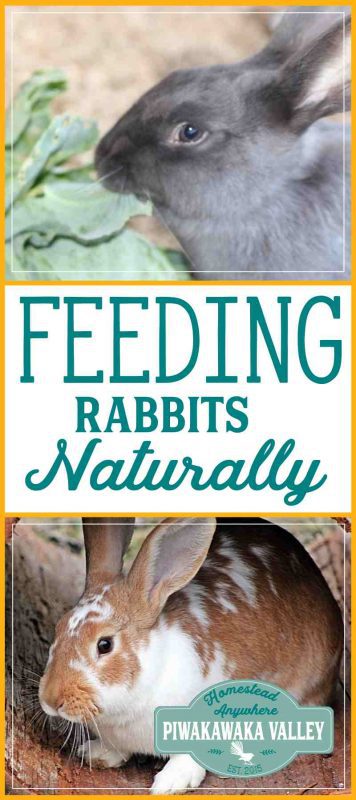

Can you raise healthy rabbits without relying on commercial pellets?
The short answer is yes—but it takes a little more planning than simply filling a feeder.
For years we’ve been working towards feeding our meat rabbits a more natural diet using homegrown forage, weeds, grains and hay. Not only does this reduce feed costs, but it also makes our rabbitry more resilient and self-sufficient.
However, feeding rabbits naturally isn’t as simple as opening the gate and letting them eat grass.
Please read: This information is provided for educational purposes only and is not intended to treat, diagnose or prevent any disease. We encourage you to make your own health care decisions in partnership with a qualified health care professional.
This post contains affiliate links, this means at no extra cost to you, we make a commission from sales. Please read our Disclosure Statement
One of the biggest challenges is making sure they receive enough protein for healthy growth, particularly if you’re raising meat rabbits. Here in New Zealand there’s another complication too.
Because Rabbit Calicivirus (RHD/RCD) is widespread in the wild rabbit population, we don’t simply collect random roadside grass or forage from areas where wild rabbits may have been feeding. This virus can survive on contaminated vegetation or even hay for up to three months, so we take care where our forage comes from.
Over the years we’ve experimented with different feeding systems, gradually reducing pellets while increasing homegrown feeds. We’ve learned what works, what doesn’t, and which plants the rabbits seem to race across the colony to eat first.
If you’re hoping to reduce feed costs, become less dependent on commercial pellets, or simply want to feed your rabbits a more varied diet, this guide will help you get started.
Warning: This article discusses raising rabbits for meat as well as feeding rabbits naturally. If this topic isn’t for you, please don’t continue reading.
Related: Colony vs Cage Raising Rabbits – Which is Best?
Watch: How We Feed Rabbits Without Pellets
If you’d rather see exactly what we’re feeding and hear me explain why, watch the video below first.
It walks through our feeding routine, the different foods we use and how we’ve gradually reduced our reliance on pellets.
Then come back to the article where I’ll go into much more detail about nutrition, safe foods, protein requirements and how to safely transition rabbits onto a more natural diet.
Quick Answer
Yes, rabbits can be fed without commercial pellets, but they still require a balanced diet. Good quality hay should form the foundation, while whole grains, forage, leafy greens and appropriate weeds provide additional nutrition. The biggest challenge is supplying enough protein and energy for growing rabbits while introducing new foods slowly to avoid digestive problems.
Contents
Why Feed Rabbits Naturally?
One of the core ideas behind permaculture is to make the best use of the resources you already have.
Instead of constantly bringing expensive inputs onto your property, you look around and ask, “What can I grow or use instead?”
That’s exactly how we began looking at rabbit feed.
Rabbit pellets are convenient, but they’re also one of the biggest ongoing costs when raising rabbits. If you have several breeding does and growing litters, feed bills add up surprisingly quickly.
Meanwhile, many gardens are overflowing with weeds, vegetable trimmings, prunings and plants that rabbits absolutely love.
One of my favourite permaculture sayings is:
“The problem is often the solution.”
Those weeds you’ve been pulling out of the vegetable garden may actually be valuable rabbit food.
Of course, that doesn’t mean every weed is safe. Correct plant identification is incredibly important, and if you’re ever unsure about a plant, don’t feed it.
But once you start recognising suitable forage, you’ll often find yourself seeing rabbit food everywhere.
Are Rabbit Pellets Bad?
Not at all.
Commercial rabbit pellets exist for a reason.
They’re convenient, carefully formulated and designed to provide a balanced diet with the correct levels of protein, fibre, vitamins and minerals. If your goal is simply to raise healthy rabbits with minimal effort, pellets are an excellent option.
In fact, we started exactly the same way.
For anyone new to rabbit keeping, quality pellets can remove much of the guesswork around nutrition.
The downside is that convenience comes at a price.
Pellets are one of the most expensive parts of raising rabbits, especially if you’re producing meat for your own family. They’re also highly processed, rely entirely on commercial manufacturers and often contain ingredients that have travelled long distances before reaching your rabbitry.
There have even been occasions where manufacturing mistakes have caused serious problems for rabbit owners.
One example was this FDA rabbit feed recall, which highlights why relying entirely on a single manufactured product carries some risk.
Our aim wasn’t necessarily to prove pellets were bad.
It was simply to become less dependent on them.
Growing more of our own rabbit feed fits much better with the way we try to run our small farm.
Want to Learn Everything About Raising Meat Rabbits?
Our book covers colony housing, feeding, breeding, health and much more.
Available as a
Kindle ebook,
paperback,
or directly from
our online store.
The Biggest Challenge With Feeding Rabbits Without Pellets
The biggest misconception about feeding rabbits naturally is that they can simply live on grass.
Adult rabbits can survive on grass and hay remarkably well.
Growing meat rabbits are a different story.
If you want young rabbits to grow efficiently, they need considerably more protein and energy than grass alone usually provides.
This is where many natural feeding systems fall short.
The rabbits survive, but they grow slowly, don’t maintain condition as well, and breeding does can struggle while feeding large litters.
For us, the goal has never been to eliminate nutrition in favour of ideology.
The goal is healthy rabbits that grow well while using as much homegrown feed as possible.
That means combining several different foods rather than relying on any single ingredient.
Related: Feeding for Optimum Rabbit Growth
How to Transition Rabbits Off Pellets Safely
If your rabbits have been raised on commercial pellets, don’t be tempted to stop feeding them overnight.
Rabbits have an incredibly specialised digestive system that relies on billions of beneficial bacteria living in the gut. Those bacteria adapt to whatever the rabbit normally eats.
Change the diet too quickly and those bacteria don’t have time to adjust.
The result can be digestive upset, diarrhoea, poor growth or, in severe cases, gut stasis.
When we first started reducing pellets, we took things very slowly.
Instead of making dramatic changes, we simply introduced a few tablespoons of whole foods alongside the pellets. Over several weeks we gradually increased the fresh foods while reducing the pellets.
This gave the rabbits’ digestive system plenty of time to adapt.
Even today, whenever we introduce a new forage plant or seasonal crop, we offer just a small amount at first and watch how the rabbits respond before making it a regular part of their diet.
Slow changes nearly always work better than sudden ones.
What We Feed Our Rabbits
Our feeding system has evolved over the years as we’ve experimented with different feeds and observed what kept the rabbits healthy, active and growing well.
Rather than relying on a single feed, we aim to provide a varied diet that changes slightly with the seasons.
At the heart of the diet is plenty of good-quality hay.
Hay keeps the digestive system functioning properly, provides essential fibre and helps wear down continuously growing teeth.
Alongside this, we feed a mixture of grains and fresh forage.
At the moment our rabbits receive:
Lucerne (alfalfa) hay, whole barley, rolled or crushed oats, unlimited meadow hay and access to a salt block.
Twice each day we also give them a generous selection of fresh greens, weeds, vegetables and garden trimmings.
When this article was first written we were still feeding a small amount of pellets while transitioning the rabbits onto more whole foods. The long-term goal, however, has always been to eliminate pellets completely where practical.
One addition I’d still like to incorporate more regularly is sunflower seed.
Sunflower seeds are an excellent source of healthy fats and can help rabbits maintain condition during colder weather, particularly breeding animals that have higher energy requirements.
The exact mix you feed will depend on what grows well in your area.
One of the biggest advantages of natural feeding is that your rabbit diet becomes seasonal.
In spring there may be an abundance of lush weeds and herbs.
Summer brings vegetable trimmings and garden surplus.
Autumn often produces pumpkins, squash and windfall fruit.
Winter is when good-quality stored hay becomes especially important.
| Feed | Main Benefit |
|---|---|
| Meadow hay | Fibre & gut health |
| Lucerne | Protein |
| Oats | Energy |
| Barley | Energy & condition |
| Fresh forage | Vitamins & minerals |
| Herbs | Variety & enrichment |
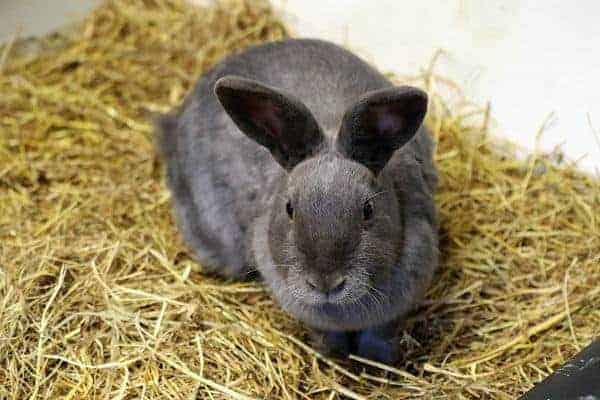
Many common garden plants, weeds and herbs make excellent rabbit food—but always positively identify plants before feeding them.
The Importance of Protein
If there’s one nutrient that’s hardest to provide when feeding rabbits naturally, it’s protein.
People often assume rabbits simply eat grass.
Wild rabbits certainly graze extensively, but they also browse a wide variety of plants, young shoots, herbs and seeds throughout the year.
Growing domestic rabbits have even higher nutritional demands, particularly fast-growing meat breeds and does feeding large litters.
Grass alone usually isn’t enough.
That’s one of the reasons commercial rabbit pellets contain relatively high protein levels.
When replacing pellets, you need to think carefully about where that protein will come from.
Fortunately, there are plenty of natural options.
Lucerne (alfalfa) is probably the best-known high-protein forage for rabbits and forms an important part of our feeding system.
Legumes such as clover can also contribute valuable protein, while grains like oats and barley provide additional energy.
Many leafy weeds and herbs contain surprisingly useful amounts of nutrients too.
Rather than searching for one perfect food, I prefer thinking of the diet as a collection of ingredients that complement one another.
Hay provides fibre.
Grains provide energy.
Lucerne/alfalfa contributes protein.
Fresh forage supplies vitamins, minerals and variety.
Together they create a balanced diet that’s both practical and affordable.
A Note for Rabbit Owners in New Zealand
If you’re reading this from another country, you may be wondering why I keep mentioning where forage comes from.
Here in New Zealand we have Rabbit Calicivirus Disease (RHD), sometimes called Rabbit Haemorrhagic Disease.
The virus is widespread in wild rabbit populations and has been deliberately released in parts of the country as a biological control.
Because of this, we’re careful about collecting grass or forage from places where wild rabbits may have been feeding.
Instead, we grow much of our rabbit forage ourselves or harvest it from areas we know are free from wild rabbit activity.
If you live somewhere without Rabbit Calicivirus, this may not be something you need to consider, but it’s an important part of managing rabbits here in New Zealand.
Safe Foods for Rabbits
One of the wonderful things about rabbits is the huge variety of plants they can safely eat.
In fact, once you start recognising suitable forage plants, you’ll probably discover that your garden is producing rabbit food long before you realise it.
That doesn’t mean every plant is safe, however.
Never feed a plant unless you’re completely confident you’ve identified it correctly.
If there’s any doubt at all, leave it out.
To make this long list easier to use, I’ve grouped the plants into categories.
Grasses, Hay and Grains
Grass, meadow hay, lucerne (alfalfa), barley, barley grass, barley sprouts, oats, wheat, wheat grass, buckwheat, sunflower, soya and vetch are all suitable rabbit feeds when introduced gradually as part of a balanced diet.
Leafy Vegetables
Dark leafy vegetables are favourites in our rabbitry. Suitable options include silver beet, Swiss chard, beetroot tops, carrot tops, celery, celeriac leaves, endive, chicory, radicchio, lettuce (romaine, butterhead, Boston and red leaf varieties), pak choi, bok choy, Chinese cabbage, mustard spinach, turnip greens and watercress.
Vegetables from the cabbage family—including cabbage, broccoli, cauliflower, kale, kohlrabi and radishes—can all be fed, but only in moderation because excessive amounts may contribute to gas and digestive upset in some rabbits.
Garden Vegetables
Many of the vegetables we grow for ourselves also become rabbit food, particularly the surplus that accumulates during summer.
Our rabbits happily eat beetroot, carrots, pumpkin, squash, zucchini, cucumber, capsicum, parsnips, celeriac, artichokes, asparagus, baby sweetcorn, tomatoes (the ripe red fruit only), eggplant (fruit only), Jerusalem artichokes and melon.
It’s amazing how much garden waste rabbits can convert into healthy meat that might otherwise have gone into the compost heap.
Of course, spoiled or mouldy vegetables should never be fed.
Fresh, clean produce is always the safest option.
Fruit
Fruit is best thought of as a treat rather than a staple food.
Most rabbits absolutely love sweet fruit, but because of the sugar content it should only make up a small part of the overall diet.
Suitable fruits include apples, pears, bananas (including the peel), apricots, peaches, nectarines, plums, grapes, blueberries, raspberries, strawberries, cranberries, currants, watermelon, rockmelon, honeydew melon, pineapple, papaya, mangoes, kiwi fruit, starfruit, tangerines and lime.
Stone fruit should always have the stones removed before feeding.
Citrus peel should also be avoided, although the flesh of oranges can be offered in small quantities.
As a general guide, try to limit sugary fruit to around two tablespoons per rabbit each day to help prevent obesity and dental problems.
Garden Herbs
One thing that often surprises new rabbit owners is just how many culinary herbs rabbits enjoy.
Many herbs are highly nutritious, wonderfully aromatic and easy to grow around the garden.
Suitable herbs include basil, coriander (cilantro), dill, fennel, parsley, oregano, rosemary, sage, thyme, tarragon, marjoram, savory, lemon balm, mint, peppermint, lavender, camomile, chervil, lovage and burnet.
The different mint varieties are especially popular with our rabbits and grow vigorously enough to provide a regular harvest throughout much of the year.
One exception worth remembering is lavender, which is generally best avoided for pregnant does as it may stimulate uterine contractions.
Safe Trees and Shrubs
Many trees provide valuable browse for rabbits, particularly during summer when fresh branches also help satisfy their natural chewing behaviour.
Suitable trees include apple, pear, willow, poplar (excluding black poplar), hazel, birch, beech, maple, hawthorn, mountain ash, mulberry, spruce, fir and grape vines.
Fresh branches also help wear down continuously growing teeth while providing environmental enrichment.
Whenever possible, only collect branches from trees that haven’t been sprayed with herbicides or pesticides.
Useful Garden Weeds
This is where natural rabbit feeding really becomes interesting.
Some of the weeds we spend hours pulling out of the vegetable garden are actually highly nutritious rabbit food.
Dandelion is probably the best known, but it’s far from the only option.
Rabbits also enjoy chickweed, fat hen, cleavers, goosegrass/clevers, plantain, shepherd’s purse, sow thistle, purslane, yarrow, mallow, clover, dock (before flowering), ground elder (before flowering), goutweed (before flowering), goosefoot, knotgrass, nipplewort, hawkweed, hawkbit, oxeye daisy, daisies, mayweed, meadowsweet, cow parsley, hedge parsley and several others.
One of the joys of learning these plants is that you begin seeing rabbit food almost everywhere you look.
Just remember that positive identification is essential and non-scientific names can vary from place to place.
If you aren’t completely certain what a plant is, don’t feed it.
Plants That Are Toxic to Rabbits
Although rabbits can safely eat an enormous range of plants, there are also some that should never be offered.
Some are mildly irritating while others can be fatal.
This isn’t intended to be a complete list of every poisonous plant, but these are some of the more common ones to avoid.
Do not feed:
Plants grown from bulbs, amaryllis, arum lily, bindweed, bracken, bryony, buttercup (except small amounts dried in hay), deadly nightshade, woody nightshade, foxglove, fool’s parsley, hemlock, henbane, hellebores, lily of the valley, lupins, laburnum, ragwort, privet, yew, elder, delphinium, poppies, potato tops, oak leaves, rhubarb leaves, scarlet runner, toadflax and most evergreen foliage.
Rhubarb deserves a special mention because it often causes confusion.
The stalks can be fed in small quantities, but the leaves are poisonous and should never be given to rabbits.
If you’re ever unsure whether a plant is safe, the simplest rule is also the safest:
If in doubt, leave it out.
Frequently Asked Questions
Can rabbits live without pellets?
Yes. Rabbits can thrive without commercial pellets provided they receive a well-balanced diet that supplies adequate fibre, protein, energy, vitamins and minerals. Good-quality hay should always form the basis of the diet.
Can rabbits eat only grass?
Adult rabbits can survive on grass and hay, but growing rabbits, breeding does and meat rabbits usually require additional protein and energy for good health and growth.
What is the best hay for rabbits?
Meadow hay is an excellent everyday forage because it’s high in fibre. Lucerne (alfalfa) is richer in protein and calcium, making it particularly useful for growing rabbits and lactating does.
Can rabbits eat weeds?
Many weeds are perfectly safe and highly nutritious, including dandelion, chickweed, plantain, clover and fat hen. However, never feed weeds unless you’ve identified them with complete confidence.
How often should rabbits be fed fresh greens?
We feed fresh forage twice each day, alongside unlimited hay. Fresh food should complement—not replace—their fibre intake.
Can rabbits eat fruit every day?
Fruit is best fed in moderation because of its natural sugar content. Small amounts make an excellent treat, but too much can contribute to obesity and digestive upset.
Why shouldn’t rabbit diets be changed suddenly?
Rapid dietary changes can upset the delicate balance of bacteria in the rabbit’s digestive system, increasing the risk of diarrhoea or gut stasis. Introduce all new foods gradually over several days or weeks.
Do rabbits need salt?
Many rabbit keepers provide a mineral or salt block as an additional source of trace minerals, although requirements vary depending on the rest of the diet.
Final Thoughts
Feeding rabbits naturally has become one of my favourite parts of keeping them.
Instead of seeing weeds, prunings and surplus vegetables as waste, I now see them as valuable resources that help feed our rabbits while reducing our reliance on purchased feed.
That doesn’t mean pellets are wrong.
For many people they’re the simplest and most practical option.
But if your goal is greater self-sufficiency, lower feed costs and making better use of what your property already produces, a carefully planned natural diet can work extremely well.
Take things slowly, introduce new foods gradually and pay attention to how your rabbits respond.
Every property is different, and over time you’ll discover which plants grow well in your area and which ones your rabbits enjoy most.
If you’d like to learn more about raising rabbits, breeding, housing and colony systems, be sure to explore the rabbit articles below.
Related: The Ultimate Guide to Raising Meat Rabbits
I’d love to hear from you!
What do you feed your rabbits? Have you successfully reduced or eliminated pellets? Leave a comment below and share your experience—it may help another rabbit keeper looking to do the same.
Please pin and share if you found this guide helpful!