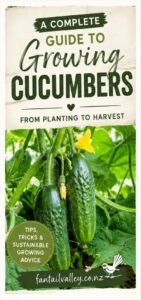

Few vegetables say “summer” quite like a freshly picked cucumber. Crisp, juicy and incredibly refreshing, cucumbers are one of the most rewarding crops you can grow at home. A handful of healthy plants can produce dozens—sometimes hundreds—of cucumbers over a season, providing more than enough for salads, sandwiches, pickling and sharing with friends.
They’re also one of the fastest-growing vegetables in the garden. Watching a tiny seed transform into a vigorous vine covered in flowers and fruit in just a few weeks never gets old.
That said, cucumbers can sometimes test your patience.
Please read: This information is provided for educational purposes only and is not intended to treat, diagnose or prevent any disease. We encourage you to make your own health care decisions in partnership with a qualified health care professional.
This post contains affiliate links, this means at no extra cost to you, we make a commission from sales. Please read our Disclosure Statement
One week your plants look incredible, and the next they’re covered in aphids, developing powdery mildew or producing flowers with no fruit. I’ve certainly experienced both extremes. Some seasons I’ve harvested cucumbers almost every day, while others I’ve battled black aphids that seemed determined to destroy every plant in the tunnel house.
The good news is that most cucumber problems are preventable. Healthy soil, consistent watering, good airflow and encouraging beneficial insects will solve the majority of issues before they become serious.
In this guide I’ll walk you through everything I’ve learnt about growing cucumbers—from choosing the right variety through to harvesting baskets full of crisp, delicious fruit.
Quick Answer
Cucumbers grow best in rich, well-drained soil with plenty of compost, full sunshine and consistent moisture. Start seeds once the soil has warmed, grow plants vertically whenever possible, feed regularly with organic fertiliser, keep the soil evenly moist and harvest fruit frequently to encourage continuous production.
Contents
- Why Grow Cucumbers?
- Choosing the Right Variety
- Growing Cucumbers from Seed
- Preparing the Soil
- Planting Cucumbers
- Watering Cucumbers
- Feeding Cucumber Plants
- Growing Cucumbers Vertically
- Flowers & Pollination
- Companion Planting
- Common Cucumber Problems
- Cucumber Pests
- Diseases
- Harvesting
- Frequently Asked Questions
Why Grow Cucumbers?
Cucumbers are one of the highest-yielding vegetables you can grow in relation to the space they occupy. Even a couple of healthy vines can keep an entire family supplied throughout summer.
Unlike many vegetables that produce one harvest before finishing, cucumbers keep flowering and setting fruit for months if they’re harvested regularly.
Growing your own also gives you access to dozens of varieties that rarely appear in supermarkets. Instead of being limited to one or two standard cucumbers, you can grow sweet Lebanese cucumbers, crisp pickling gherkins, giant Telegraph cucumbers, round apple cucumbers and colourful heirloom varieties.
Perhaps best of all, homegrown cucumbers taste completely different. They’re crisp, juicy and full of flavour, without the thick wax coating often found on commercially grown fruit.
Choosing the Right Cucumber Variety
The first step to success is choosing a variety suited to the way you want to use your harvest.
| Type | Best For |
|---|---|
| Lebanese | Fresh eating, prolific harvests |
| Telegraph | Tunnel houses and greenhouses |
| Pickling / Gherkin | Pickles and preserves |
| Apple Cucumbers | Novelty and sweet flavour |
If you’re growing outdoors in New Zealand, choose varieties bred for cooler conditions. If you’re growing inside a tunnel house, long Telegraph or burpless cucumbers perform exceptionally well.
Whenever possible I recommend growing at least two different varieties. Not only does this spread your risk if one struggles, but it also gives you a longer harvesting season and a variety of flavours and textures.
Growing Cucumbers from Seed
Cucumbers are among the easiest vegetables to grow from seed.
Unlike slower-growing crops, cucumber seedlings establish quickly and usually catch up to purchased seedlings in a surprisingly short time.
I generally sow mine indoors a few weeks before the last frost or direct sow once the soil has warmed properly. Cucumbers dislike cold soil, so waiting until temperatures are consistently warm almost always produces stronger plants than sowing too early.
Use individual pots rather than seed trays wherever possible.
Cucumber roots dislike being disturbed, so planting seedlings with minimal root disturbance gives them the best possible start.
RELATED: How to Grow Vegetables from Seed
Once seedlings have developed several true leaves and nighttime temperatures remain warm, they’re ready to move into the garden.
Preparing the Perfect Soil
If tomatoes are hungry plants, cucumbers are positively greedy.
They’re incredibly fast growers and produce a huge amount of leafy growth before setting dozens of fruit. That requires fertile soil packed with organic matter.
Before planting I always incorporate generous amounts of homemade compost into the bed.
Compost does much more than provide nutrients. It improves drainage, increases moisture retention, feeds soil biology and creates an environment where cucumber roots can spread rapidly.
I also like adding worm castings into each planting hole because they introduce beneficial microorganisms while providing slow-release nutrition.
The healthier your soil biology becomes, the healthier your cucumber plants generally become.
RELATED: Building Healthy Garden Soil
Planting Cucumbers
One of the biggest mistakes gardeners make is planting cucumbers too early.
Unlike peas or broad beans, cucumbers absolutely love warmth. Cold soil slows growth, weakens young plants and leaves them much more vulnerable to pests and diseases.
I always wait until the soil has warmed properly before planting outdoors. It’s much better to plant a couple of weeks later into warm, biologically active soil than to rush and watch seedlings struggle for a month.
When planting, dig a generous hole and fill it with compost before setting the seedling into place.
Water thoroughly after planting and apply a thick layer of mulch once the soil has warmed.
If you’re growing cucumbers vertically, install your support before planting. Trying to force stakes or trellis into the ground once roots have spread can easily damage the plant.
Watering Cucumbers Properly
If there’s one thing cucumbers dislike, it’s inconsistency.
Alternating between dry soil and soaking wet soil stresses the plants and often results in bitter fruit, poor growth and lower yields.
The goal is simple: keep the soil consistently moist without leaving it waterlogged.
I prefer giving cucumber plants a deep soak every few days rather than light watering every afternoon. Deep watering encourages roots to travel further into the soil, producing stronger, more drought-tolerant plants.
Morning is generally the best time to water.
This gives any moisture on the leaves time to dry before evening, reducing the chances of fungal diseases developing.
Whenever possible I water the soil rather than the foliage.
Drip irrigation, soaker hoses or careful hand watering all achieve this while wasting very little water.
Mulching also makes a remarkable difference.
A thick layer of straw, compost or shredded leaves slows evaporation dramatically and keeps soil temperatures much more stable throughout summer.
RELATED: The Benefits of Mulching Your Vegetable Garden
Feeding Cucumber Plants
Because cucumbers grow so quickly, they appreciate regular feeding throughout the season.
I think of feeding cucumbers as supporting both the plants and the soil.
Rather than relying solely on synthetic fertilisers, I prefer combining compost with slow-release organic fertilisers and occasional liquid feeds.
This approach provides immediate nutrients while continuing to build healthier soil over the long term.
During the early stages of growth, plants require enough nitrogen to develop healthy vines and leaves.
Once flowering begins, however, excessive nitrogen can encourage lots of leafy growth but relatively few cucumbers.
At that stage I switch to feeds that encourage flowering and fruit production while still supporting overall plant health.
Seaweed extracts, compost teas and worm tea all work well alongside a balanced fertiliser programme.
If your plants are growing vigorously and producing plenty of fruit, resist the temptation to overfeed.
Sometimes the healthiest cucumber plants are those that receive consistent care rather than constant intervention.
Why I Prefer Growing Cucumbers Vertically
If you only make one change to the way you grow cucumbers this year, I’d recommend growing them vertically.
Allowing vines to climb instead of sprawling across the ground has transformed my cucumber harvests.
Growing upwards improves airflow around the leaves, keeps fruit cleaner and makes harvesting much easier.
It’s also far easier to spot pests and diseases before they become serious.
Inside my tunnel house I grow cucumbers up strings suspended from the roof, much like tomatoes.
Outdoors, cattle panels, mesh fencing, wooden trellises or strong netting all work well.
The tendrils naturally wrap around supports, although occasionally I help young plants find their way until they begin climbing by themselves.
Vertical growing also produces straighter cucumbers because the fruit hangs freely instead of curling around obstacles on the ground.
Perhaps my favourite benefit, though, is simply how much easier harvesting becomes. Instead of searching beneath dense foliage, the cucumbers are hanging right in front of you.
Understanding Cucumber Flowers
One of the questions I hear most often is:
“Why do my cucumber flowers fall off without producing fruit?”
The answer usually lies in understanding that cucumber plants produce two different types of flowers.
Male flowers appear first.
Their job is simply to produce pollen.
Female flowers develop slightly later and can easily be recognised by the tiny immature cucumber sitting directly behind the flower.
For traditional cucumber varieties, pollen must be transferred from the male flower to the female flower before fruit develops.
Normally bees do this job beautifully.
If pollinator numbers are low or you’re growing inside a closed greenhouse, you may occasionally need to hand pollinate using a small paintbrush or by gently touching a freshly opened male flower against a female flower.
Some greenhouse varieties are parthenocarpic, meaning they produce fruit without pollination.
These varieties are particularly useful in tunnel houses where bee activity may sometimes be limited.
Companion Planting for Cucumbers
Cucumbers grow beautifully alongside many herbs, flowers and vegetables.
Rather than relying on companion planting as a miracle solution, I think of it as another way of increasing biodiversity within the vegetable garden.
Flowers attract pollinators, herbs support beneficial insects and a diverse planting generally creates a healthier growing environment than long rows of cucumbers alone.
Some of my favourite cucumber companions include marigolds, nasturtiums, dill, beans, lettuce and calendula.
Nasturtiums are particularly useful because they often attract aphids away from cucumber vines, acting as a trap crop.
Dill is another favourite.
Once allowed to flower it attracts hoverflies, parasitic wasps and many other beneficial insects that help keep pest populations under control.
RELATED: The Complete Companion Planting Guide
Like every aspect of gardening, observe what works in your own garden. Climate, local pests and soil conditions all influence which combinations perform best.
Common Cucumber Problems (And How to Fix Them)
Even healthy cucumber plants occasionally run into problems.
The encouraging news is that most issues leave clear clues if you know what to look for. Learning to recognise these early warning signs can often save your crop before serious damage occurs.
Yellow Leaves
Yellow leaves are probably the most common cucumber problem gardeners encounter.
Sometimes they’re perfectly normal.
Older leaves naturally yellow and die as plants mature, particularly those growing near the base of vigorous vines.
If younger leaves begin yellowing, however, the cause may be:
- Overwatering.
- Underwatering.
- Poor drainage.
- Nutrient deficiencies.
- Cold soil.
- Disease.
Rather than immediately reaching for fertiliser, take a few minutes to check soil moisture, inspect the stems and look closely beneath the leaves for insects.
The cause is often simpler than you expect.
Why Are My Cucumbers Bitter?
Few things are more disappointing than growing beautiful cucumbers only to discover they’re bitter.
Bitterness usually develops when plants experience stress.
The most common causes include:
Inconsistent watering, prolonged hot weather, drought stress and allowing fruit to remain on the vine for too long.
Fortunately, preventing bitter cucumbers is usually straightforward.
Keep plants evenly watered, mulch generously and harvest fruit while they’re still young and tender.
Modern varieties have also been bred to reduce bitterness significantly compared with older cucumber varieties.
Flowers but No Cucumbers
If your plants are covered in flowers but very few cucumbers develop, don’t panic.
This is often perfectly normal early in the season.
Cucumber plants usually produce male flowers first.
Female flowers begin appearing later, once plants are growing strongly.
If female flowers are present but tiny cucumbers begin forming before shrivelling and dropping off, poor pollination is often responsible.
Encouraging bees—or hand pollinating where necessary—usually solves the problem.
Misshapen or Curved Cucumbers
Crooked cucumbers are surprisingly common.
Possible causes include:
- Incomplete pollination.
- Inconsistent watering.
- Fruit pressing against obstacles.
- Cool weather slowing development.
Growing cucumbers vertically usually produces much straighter fruit because gravity allows them to develop evenly.
Plants Suddenly Collapse
Healthy cucumber plants that suddenly wilt despite moist soil may be suffering from root disease or bacterial wilt.
Occasionally root damage from pests can produce similar symptoms.
If only one vine is affected while neighbouring plants remain healthy, remove the affected plant promptly and monitor the others closely.
Common Cucumber Pests
One thing I’ve learnt over the years is that pest problems usually tell you something about the overall health of the garden.
Healthy, diverse gardens full of flowers and beneficial insects rarely suffer devastating pest outbreaks compared with gardens planted as large monocultures.
That doesn’t mean pests never arrive—but nature often helps keep them under control.
Aphids
If you’ve followed my gardening for a while, you’ll know aphids have provided me with plenty of learning opportunities.
I’ve had seasons where they appeared almost overnight and completely covered young cucumber plants.
The good news is that aphids are usually manageable if you act early.
Ladybirds, lacewings, hoverflies and tiny parasitic wasps are incredibly effective natural predators.
Encouraging these beneficial insects should always be your first line of defence.
If populations become overwhelming, a simple homemade white oil spray can provide effective control without reaching immediately for harsher chemicals.
RELATED: How to Get Rid of Aphids on Cucumber Plants Naturally
Whitefly
Whiteflies are particularly common inside greenhouses and tunnel houses.
Disturb the leaves and a cloud of tiny white insects rises into the air.
Like aphids, they feed by sucking sap from the plant and can weaken vigorous growth if numbers become excessive.
Yellow sticky traps help monitor populations, while encouraging beneficial insects provides long-term control.
Spider Mites
Hot, dry conditions favour spider mites.
These tiny pests are difficult to see with the naked eye, but fine webbing and tiny pale speckles on the leaves are good indicators.
Increasing humidity, encouraging predatory mites and maintaining healthy plants usually keeps them under control.
Slugs and Snails
Young cucumber seedlings are particularly attractive to slugs and snails.
Protect seedlings early and they’ll usually outgrow minor damage once vines begin growing rapidly.
Common Cucumber Diseases
Most cucumber diseases become much more common when leaves remain wet for long periods or airflow is poor.
That’s one of the reasons I strongly recommend growing cucumbers vertically whenever possible.
Powdery Mildew
Powdery mildew appears as a white powdery coating across the leaves.
It’s especially common towards the end of summer.
Good airflow, avoiding excessive nitrogen and watering the soil rather than the foliage all help reduce infections.
Removing badly affected leaves early also slows its spread.
Downy Mildew
Downy mildew causes yellow patches that eventually turn brown while grey-purple fungal growth develops underneath the leaves.
This disease spreads rapidly during humid conditions.
Ventilation is one of the most effective preventative measures.
Root Rot
Poor drainage is the biggest cause of root rot.
Cucumbers enjoy consistent moisture but dislike sitting in waterlogged soil.
Building healthy, well-drained soil with plenty of compost remains the best long-term prevention.
Growing Cucumbers in a Tunnel House
If I had to choose one crop that truly loves my tunnel house, cucumbers would be right near the top of the list.
The warm temperatures allow rapid growth, fruit develops earlier and harvesting usually continues much longer than outdoors.
However, tunnel houses also require a slightly different approach.
Ventilation becomes incredibly important.
Warm, humid air trapped around dense foliage creates ideal conditions for fungal diseases and whitefly.
I keep doors and vents open whenever weather allows and train every cucumber vertically to maximise airflow.
Regular harvesting also encourages plants to keep producing.
It’s remarkable how quickly a cucumber can become oversized if you miss it for a couple of days!
During the height of summer I often harvest every day.
Harvesting Cucumbers
One of the biggest secrets to growing lots of cucumbers is surprisingly simple.
Pick them often.
Every cucumber left on the vine tells the plant that its job is nearly finished because it has produced mature seed.
Regular harvesting sends the opposite message. The plant continues producing flowers and setting more fruit because it hasn’t yet completed its life cycle.
During the height of summer I usually check my cucumber plants every day or two.
It’s amazing how quickly a cucumber can grow from “almost ready” to “far too big.”
Different varieties are best picked at different sizes, but in general younger cucumbers are sweeter, crisper and contain fewer large seeds.
Use clean secateurs or a sharp knife rather than pulling fruit from the vine. Twisting or yanking cucumbers can easily damage brittle stems and developing flowers.
If you’re suddenly harvesting more than your family can eat, don’t worry. Cucumbers are excellent for sharing, pickling and preserving.
How to Store Cucumbers
Freshly picked cucumbers are always at their absolute best.
Unlike pumpkins or onions, they’re not designed for long-term storage.
If you can’t eat them immediately, store them in the vegetable drawer of the refrigerator.
Avoid sealing them tightly inside plastic bags because trapped moisture encourages soft spots and mould.
If you’ve harvested a glut, consider making:
- Traditional pickled cucumbers.
- Sweet bread-and-butter pickles.
- Relishes.
- Cucumber relish for sandwiches.
Preserving part of the harvest is a wonderful way to enjoy your garden well beyond summer.
Saving Cucumber Seed
If you’re growing open-pollinated or heirloom cucumbers, saving your own seed is both rewarding and economical.
Over time you’ll gradually select plants that perform particularly well in your own climate and growing conditions.
Unlike eating cucumbers, seed-saving cucumbers need to remain on the vine until they’re fully mature.
They’ll become much larger, change colour and develop hard mature seed inside.
Once harvested, scoop out the seeds, rinse away the surrounding pulp and dry them thoroughly before storage.
Properly dried cucumber seed remains viable for several years if stored somewhere cool, dry and dark.
Remember that hybrid varieties won’t grow true from saved seed, so choose open-pollinated varieties if seed saving is your goal.
Extending Your Cucumber Season
Cucumber plants naturally slow as temperatures cool, but there are several simple ways to enjoy harvests for much longer.
Starting seedlings indoors, planting into a tunnel house and succession sowing every few weeks can all significantly extend your season.
Rather than planting every cucumber at once, I often sow another small batch several weeks later.
By the time the first plants begin slowing down, the younger plants are just reaching their peak.
This simple strategy provides fresh cucumbers over a much longer period instead of one enormous harvest followed by nothing.
Summary: 10 Tips for Growing Amazing Cucumbers
If you only remember a few things from this guide, make them these:
- Wait until the soil is genuinely warm before planting.
- Build healthy, compost-rich soil.
- Water deeply and consistently.
- Mulch generously.
- Grow vertically whenever possible.
- Feed regularly without overdoing nitrogen.
- Encourage bees and beneficial insects.
- Inspect plants regularly for pests.
- Harvest frequently.
- Keep experimenting and learning.
These ten habits alone will dramatically improve the health and productivity of your cucumber plants.
Frequently Asked Questions
How long do cucumbers take to grow?
Most cucumbers begin producing fruit around 50–70 days after sowing, depending on the variety and weather conditions.
Can cucumbers grow in pots?
Absolutely. Choose a large container, provide a climbing support and water consistently throughout summer.
Do cucumbers need full sun?
Yes. Six to eight hours of direct sunlight is the minimum, although more sunshine usually produces heavier crops.
Should cucumbers climb?
Whenever possible, yes. Vertical growing improves airflow, keeps fruit cleaner and makes harvesting much easier.
Why are my cucumbers bitter?
Bitterness is usually caused by plant stress, especially inconsistent watering and prolonged hot weather.
Why are my cucumber flowers falling off?
Male flowers naturally fall after releasing pollen. If female flowers drop, poor pollination is often the cause.
How often should I water cucumbers?
Water deeply whenever the soil begins drying rather than giving frequent shallow watering.
Can I grow cucumbers in a tunnel house?
Yes. In fact, tunnel houses often produce exceptional cucumber crops provided there is plenty of ventilation and plants are trained vertically.
Why are my cucumber leaves turning yellow?
Yellow leaves may indicate natural ageing, nutrient deficiencies, watering problems or disease. Look at the whole plant before deciding on a solution.
Do cucumbers need bees?
Most outdoor varieties do, although some greenhouse cucumbers are parthenocarpic and develop fruit without pollination.
How often should I harvest cucumbers?
Every day or two during peak production. Frequent harvesting encourages plants to continue flowering and producing fruit.
Can I save cucumber seed?
Yes, provided you’re growing open-pollinated varieties rather than hybrids.
Final Thoughts
Cucumbers are one of those vegetables that quickly reward good gardening habits.
Healthy soil, plenty of sunshine, consistent watering and regular harvesting will produce far better results than chasing miracle fertilisers or expensive products.
They’ve certainly taught me plenty over the years.
I’ve battled aphid invasions, learnt the importance of good airflow inside a tunnel house and discovered just how productive a handful of healthy plants can become when everything comes together.
Every season is a little different, but that’s one of the things I love most about gardening. There’s always something new to learn.
If you’re just starting out, don’t aim for perfection.
Plant a few cucumbers, observe them closely and enjoy the process. Before long you’ll be harvesting more crisp, homegrown cucumbers than you know what to do with.
If you’d like help creating a productive vegetable garden or learning to grow more of your own food, I’d love to help. Find out more here.
Related Guides You’ll Find Helpful
- How to Grow Vegetables from Seed
- The Complete Companion Planting Guide
- How to Get Rid of Aphids on Cucumber Plants Naturally
- Why Mulching Makes Every Vegetable Garden Better
- Starting a Vegetable Garden from Scratch
If you found this guide helpful, save one of the Pinterest images below so you can easily find it again when cucumber season rolls around.