

Thinking about raising rabbits in a colony? Whether you’re planning your very first rabbitry or looking to move away from cages, a well-designed rabbit colony can provide a healthier, more natural environment for your rabbits while making day-to-day management easier.
We’ve been raising meat rabbits for years, and our colony has evolved considerably over that time. We’ve learnt what works brilliantly, what doesn’t, and what we’d do differently if we were starting again today.
This guide brings together everything we’ve learned about designing, building and managing a successful rabbit colony—from choosing the right location and deciding between indoor or outdoor housing, to feeding, cleaning, breeding and introducing new rabbits.
If you’re hoping to create happy, healthy rabbits that have room to run, dig, stretch, play and simply be rabbits, you’re in the right place.
Please read: This information is provided for educational purposes only and is not intended to treat, diagnose or prevent any disease. We encourage you to make your own health care decisions in partnership with a qualified health care professional.
This post contains affiliate links, this means at no extra cost to you, we make a commission from sales. Please read our Disclosure Statement
Quick Answer
A rabbit colony is a group housing system where rabbits live together in a shared enclosure rather than individual cages. A well-designed colony provides plenty of space, multiple feeding stations, shelter from predators and weather, good ventilation, nesting areas and clean bedding. Colony systems encourage natural rabbit behaviours such as running, jumping, digging and socialising while making daily care more enjoyable for many homesteaders.
For most small homesteads, an indoor shed colony with a deep litter floor offers an excellent balance between rabbit welfare, disease control and ease of management.
📚 Jump to a Section
- What is a Rabbit Colony?
- Why We Chose Colony Raising
- Why Raise Your Own Meat Rabbits?
- Rabbit Colony vs Cage Raising
- Benefits of a Rabbit Colony
- Potential Downsides
- Planning Your Rabbit Colony
- Indoor vs Outdoor Colonies
- How Much Space Do Rabbits Need?
- Choosing the Best Flooring
- Designing Your Colony
- Feeding Stations
- Water Systems
- Nest Boxes
- Keeping Your Colony Clean
- Introducing New Rabbits
- Frequently Asked Questions
What is a Rabbit Colony?
A rabbit colony is a housing system where several rabbits live together in a shared space rather than in individual cages.
Instead of spending their lives on wire floors, colony rabbits can run, stretch, stand upright, dig, jump, groom one another and establish their own social hierarchy.
A colony may be:
- a converted garden shed
- a purpose-built rabbit barn
- a secure outdoor enclosure
- a fenced paddock
- or a combination of indoor and outdoor spaces.
Most colonies include:
- deep bedding or soil flooring
- multiple feeding stations
- water stations
- nest boxes
- places to hide
- areas to jump and climb
- shelter from rain and sun
- predator-proof fencing.
Breeding often occurs naturally, with the does choosing when they accept the buck, rather than relying entirely on scheduled matings.
When designed well, a colony encourages rabbits to behave much more like rabbits.
Read our complete guide to raising meat rabbits in colonies here.
Why We Chose Colony Raising
I’ll admit it…
I’m still not entirely sure how we reached the point where I decided raising meat rabbits sounded like a wonderful hobby.
Somewhere between reading old homesteading books and dreaming about becoming more self-sufficient, I discovered that rabbits are one of the most efficient meat animals you can raise.
That started a rabbit hole… quite literally.
As I researched more, I kept coming back to one question.
If rabbits naturally live in family groups, run through tunnels and spend their days exploring, why would I want mine sitting alone in tiny cages?
I remembered visiting a lady as a child who bred rabbits and guinea pigs together in a large shed.
The rabbits weren’t frightened.
They weren’t pacing.
They weren’t hiding in corners.
They were racing around, playing, climbing over logs and happily investigating every visitor.
That memory stayed with me for years.
Later, when my husband and I got our first rabbit—Nudge Montgomery—he completely confirmed my suspicions.
Nudge lived in a puppy pen inside the house and spent every opportunity he could racing around the lounge doing joyful little bunny binkies.
He had a huge personality.
Watching him convinced me that rabbits need room to move.
When we eventually decided to raise meat rabbits on the homestead, I wanted them to enjoy that same freedom.
That decision eventually led us to building our own colony system.
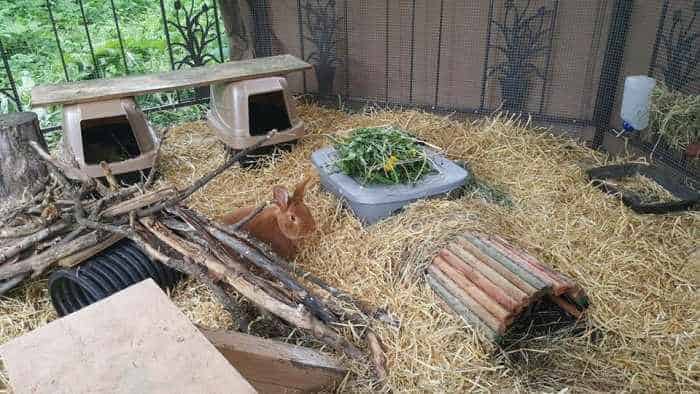
Why More Homesteaders Are Raising Meat Rabbits
For generations, keeping rabbits in the backyard was completely normal.
Long before supermarkets made meat conveniently appear wrapped in plastic, families quietly raised a few rabbits behind the house.
Today, more and more people are rediscovering them—and it’s easy to see why.
Meat rabbits are:
- quiet
- easy to handle
- highly productive
- space efficient
- fast growing
- relatively inexpensive to feed
- well suited to small lifestyle blocks.
Perhaps most importantly, raising your own rabbits means you know exactly how they were cared for.
You decide:
- what they eat
- how much room they have
- whether they can graze
- how they’re treated
- and how much enrichment they receive.
To me, that’s one of the greatest benefits of homesteading.
You aren’t simply producing food.
You’re taking responsibility for providing your animals with the very best life you can.
As I often say…
One bad day doesn’t erase a lifetime of good ones.
That philosophy influences every decision we make in our rabbitry.
If you’d like to learn more about why we chose rabbits in the first place, have a look at our article:
5 Reasons to Raise Meat Rabbits
Rabbit Colony vs Cage Raising
| Rabbit Colony | Traditional Cages |
|---|---|
| Allows natural behaviour | Easy individual management |
| Rabbits exercise freely | Less fighting |
| More social interaction | Easier breeding records |
| Requires more planning | Quicker to inspect individuals |
| Usually lower daily labour | Higher daily feeding and watering time |
| Can be more enjoyable to watch | Works well for commercial production |
Neither system is right or wrong.
The best choice depends on your goals, available space, climate, predator pressure and how involved you want to be with your rabbits each day.
For us, the extra planning required for a colony has been well worth it.
Watching rabbits interact naturally is one of the most enjoyable parts of keeping them.
Read our full comparison of colony rabbits vs cage rabbits.
Why Choose a Rabbit Colony?
There isn’t a single “right” way to raise rabbits.
Some homesteaders swear by traditional wire cages. Others love rabbit tractors, while many are now discovering the benefits of colony systems.
We’ve tried different approaches over the years, and for our lifestyle, a colony has been the clear winner.
That doesn’t mean colonies are perfect—they aren’t. They require thoughtful planning and ongoing observation. But when they’re designed well, they allow rabbits to express many of the natural behaviours that make them such fascinating animals to watch.
1. Rabbits Can Behave Like Rabbits
This is the biggest reason we chose a colony.
Rabbits weren’t designed to spend their lives sitting on a wire floor. In the wild they:
- run surprisingly fast
- dig extensive burrow systems
- stand upright to look around
- jump over obstacles
- groom one another
- sleep together
- play, chase and perform joyful “binkies”.
Watching a rabbit launch itself into the air with excitement never gets old.
Those little leaps and twists are often a sign that your rabbit feels relaxed, healthy and safe.
🐇 From Our Rabbitry
One of my favourite things about colony raising is simply sitting quietly with a cup of tea and watching everyone go about their day. You’ll see friendships develop, babies copying adults, rabbits sharing sleeping spots and the occasional youngster doing zoomies around the shed for absolutely no reason. It’s those little moments that remind me why we chose this system.
2. Better Exercise
Exercise helps rabbits maintain healthy muscles, joints and body condition.
Rather than taking a few hops across a cage, colony rabbits can sprint, climb, stretch and explore throughout the day.
This extra movement may help maintain muscle tone and reduces boredom.
3. Social Interaction
Domestic rabbits are naturally social animals.
Given enough space and suitable companions, they’ll often groom each other, nap together and establish a stable social hierarchy.
That doesn’t mean every rabbit gets along all the time—personalities still matter—but colonies allow far more natural interaction than individual cages.
4. Easier Daily Management
One thing that surprised us was how much quicker our daily routine became.
Instead of filling and cleaning multiple cages every day, we’re maintaining one larger space.
Feed stations, water containers and bedding still need attention, but the overall routine feels much more efficient.
5. A More Enjoyable Homestead
This one probably won’t appear in any scientific study…
…but it’s true.
A rabbit colony is simply enjoyable.
Visitors love it.
Children love it.
And you’ll probably find yourself spending far more time just watching your rabbits because they’re constantly doing something interesting.

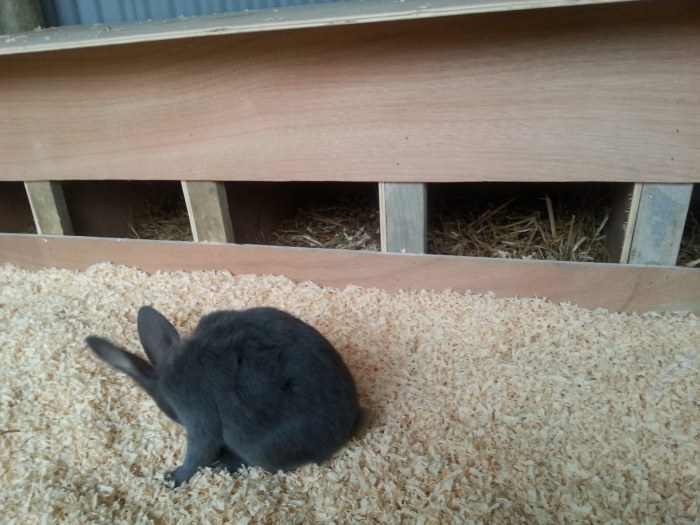
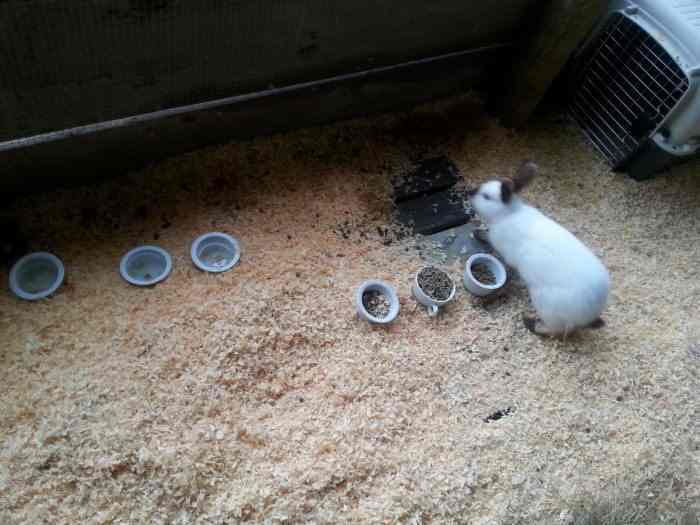
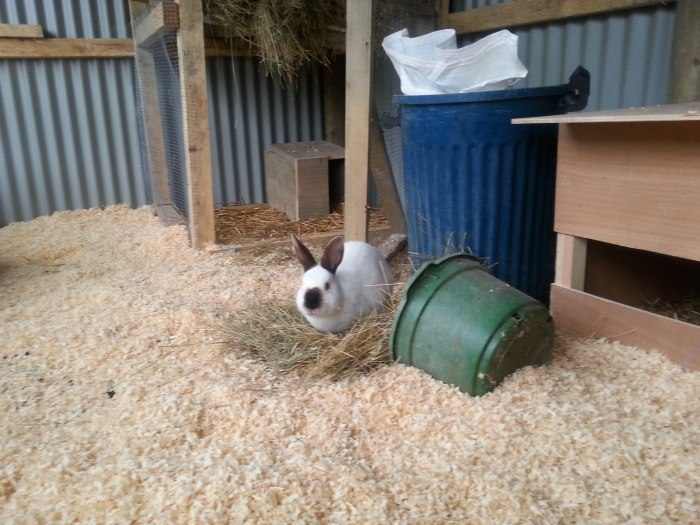
Are There Any Downsides?
Absolutely.
I’d be doing you a disservice if I pretended colonies never have problems.
Like every housing system, they have strengths and weaknesses.
Dominance and Fighting
Whenever rabbits live together there will be a social hierarchy.
Most disagreements are brief.
A chase here.
A tuft of fur there.
Nothing dramatic.
Occasionally, however, personalities simply don’t mix.
Having enough space, hiding places and feeding stations greatly reduces conflict, but sometimes an individual rabbit needs to be removed from the colony.
Breeding Isn’t Scheduled
If you leave your buck with the does all year, they’ll usually decide for themselves when breeding happens.
That’s wonderfully natural, but it also means you won’t always know exactly when litters are due.
If you need precise breeding dates for record keeping or commercial production, you may prefer controlled matings.
Catching Rabbits Takes Practice
It’s certainly easier to catch a rabbit in a cage than in a colony.
Fortunately there are simple ways to make this much easier.
We feed in the same area every day so the rabbits naturally gather there.
Having a gate that allows you to temporarily reduce the available space also makes catching individuals much less stressful.
Disease Still Needs Managing
Some people assume colony rabbits are automatically healthier.
That’s only partly true.
Good ventilation, dry bedding, regular cleaning and sensible stocking densities remain essential.
Poor management will cause problems in any housing system.
Planning Your Rabbit Colony
One of the biggest mistakes people make is building first…
…and planning later.
It’s much easier (and cheaper) to spend an extra afternoon with a tape measure than to rebuild your colony six months later.
Before buying any materials, ask yourself:
- How many breeding does do I eventually want?
- Will I keep a buck permanently with them?
- Will I raise grow-outs in the same colony?
- Do I want an indoor or outdoor system?
- What predators live in my area?
- How will I clean the colony?
- Where will feed be stored?
- How will I catch rabbits when needed?
- Can I easily expand in the future?
Thinking about these questions now can save a lot of frustration later.
The Biggest Mistake We See
People nearly always build too small.
It seems enormous while it’s empty.
Six months later you’ve kept an extra doe…
…then another…
…and suddenly you’re wondering where all the space disappeared.
If your budget allows, build slightly larger than you think you’ll need.
Future-you will almost certainly appreciate it.
Indoor vs Outdoor Rabbit Colonies
One of the first decisions you’ll need to make is whether your rabbits will live indoors, outdoors or somewhere in between.
| Indoor Shed Colony | Outdoor Colony |
|---|---|
| Excellent predator protection | More natural digging opportunities |
| Easy to manage bedding | Usually cheaper to build |
| Reduced wild rabbit contact | Greater weather exposure |
| Better disease control | More natural environment |
| Simple feeding routine | Requires excellent fencing |
We chose a shed colony because it gave us the best balance of predator protection, weather protection and biosecurity.
It also made feeding, cleaning and checking litters much easier during winter.
🐇 From Our Rabbitry
Our first floor used welded wire over soil with bricks around the edges. It worked beautifully for years until the wire eventually rusted through and the rabbits discovered they could dig underneath it. We replaced it with corrugated roofing iron covered by deep bedding, and if I were starting again today, that’s probably the system I’d build from the beginning unless I could afford a concrete floor, which would be the ultimate.
Top 10 Rabbit Colony Design Principles
- Build bigger than you think you’ll need.
- Provide multiple feeding stations.
- Always have at least two water sources.
- Create plenty of hiding places.
- Use predator-proof fencing.
- Give does several nesting options.
- Plan for easy cleaning.
- Allow good airflow without drafts.
- Add vertical levels for enrichment.
- Keep the design flexible—you’ll almost certainly improve it over time.
Remember, your colony doesn’t need to be perfect on day one.
Some of the best improvements come after you’ve watched your rabbits live in the space for a few months. They’ll quickly show you what works, what they love and what could be improved.
How Much Space Does a Rabbit Colony Need?
This is probably the question I get asked more than any other.
“How big should my rabbit colony be?”
Unfortunately, there isn’t one perfect answer.
The amount of space your rabbits need depends on:
- how many adults you have
- whether you’re breeding
- how many kits stay with their mothers
- whether grow-outs are removed after weaning
- how much enrichment you provide.
One thing is certain though…
More space nearly always makes colony management easier.
More room means less competition, fewer disagreements, cleaner bedding and happier rabbits.
A Simple Rabbit Colony Space Guide
| Rabbit | Recommended Minimum Space |
|---|---|
| Adult Buck | 1m² (10 sq ft) |
| Adult Doe | 2m² (20 sq ft) |
| Growing Rabbits | 0.5m² (5 sq ft) each until processing or sale |
These figures are minimums.
If your budget or available space allows, your rabbits will almost certainly appreciate more room.
Working Out Your Colony Size
One of the easiest ways to estimate colony size is with this simple formula.
Metric
Colony Size = (1 × Bucks) + (2 × Does)
Imperial
Colony Size = (10 × Bucks) + (20 × Does)
This calculation allows space for breeding does and kits before weaning.
If you move grow-outs into their own pen after weaning—as we do—you’ll usually find the breeding colony remains much calmer and cleaner.
🐇 From Our Rabbitry
Our shed is just under 10m², which is a handy size in New Zealand because buildings under 10m² generally don’t require building consent (always check your local regulations). It comfortably houses our breeding buck, four does and their litters before we move the youngsters into a grow-out pen.
If I built again tomorrow, I’d probably go closer to 15m² simply because colonies have a funny way of filling up faster than you expect!
Choosing the Best Flooring
Ask ten rabbit keepers about flooring and you’ll probably receive twelve different answers.
Every option has strengths and weaknesses, so the best choice depends on your climate, drainage, budget and how much maintenance you’re willing to do.
Concrete
Pros
- Easy to clean
- Excellent predator protection
- Long lasting
- Easy to disinfect
Cons
- Can become slippery
- Hard on joints without bedding
- Requires excellent drainage
Dirt Floors
Dirt floors are popular because they feel natural and allow urine to drain away.
When managed well they stay remarkably fresh.
However, rabbits are enthusiastic diggers.
If predators are a concern—or rabbits escaping is illegal where you live—you’ll need to install an underground barrier.
Many people bury:
- corrugated roofing iron
- heavy-duty mesh
- geotextile fabric
- pavers
- rocks and broken concrete.
Pavers or Bricks
Bricks create a durable floor while still allowing water to drain through the gaps.
They’re often inexpensive if you can find recycled materials.
That’s exactly what we did in part of our colony.
Deep Litter
This is my favourite option.
A generous layer of straw or pine shavings over a solid floor creates a comfortable, insulating surface that rabbits seem to love.
As fresh bedding is continually added, the lower layers begin composting slowly underneath.
When managed correctly, deep litter is surprisingly clean and greatly reduces ammonia smells.
🐇 From Our Rabbitry
We’ve experimented with several floor systems over the years, and deep litter has been the easiest to live with. The rabbits stay cleaner, winter management is simpler, and cleaning day isn’t nearly as unpleasant as many people imagine.
Predator-Proofing Your Rabbit Colony
Nothing is more heartbreaking than losing rabbits to predators.
Before bringing rabbits home, spend time making your colony as secure as possible.
Remember that predators don’t just come from outside.
Some dig underneath.
Some climb.
Some squeeze through surprisingly small gaps.
Common Rabbit Predators
- Dogs
- Cats
- Stoats
- Ferrets
- Weasels
- Foxes (where present)
- Hawks
- Eagles
- Owls
- Large snakes (in some countries)
Predator-Proofing Checklist
✔ Strong perimeter fencing
✔ Buried dig barrier
✔ Roof or wire mesh overhead
✔ Secure night housing
✔ Strong door latches
✔ Small mesh to exclude young predators
✔ No gaps larger than 25mm around doors
✔ Lock feed away from rats and mice
✔ Inspect fencing regularly
Remember—predators only need one opportunity.
It’s much easier to prevent a problem than fix one afterwards.
Designing the Perfect Rabbit Colony
One of the biggest advantages of a colony is that you aren’t limited to a flat rectangle.
You can create a space that’s interesting, enriching and easy to manage.
Think about how rabbits naturally use different parts of their environment.
They like:
- quiet sleeping areas
- high lookout points
- covered hiding places
- places to chew
- wide open spaces to sprint
- tunnels to explore
- different textures underfoot.
Use Vertical Space
Many people focus only on floor area.
Don’t forget the walls.
Adding sturdy shelves, ramps and platforms gives rabbits extra room without increasing the building footprint.
Rabbits often enjoy sitting up high where they can observe everything happening below.
Provide Plenty of Hiding Places
Every rabbit occasionally wants a little privacy.
Simple hiding places can include:
- wooden boxes
- plastic tubs with doors cut in them
- large pipes
- logs
- upturned pallets
- woven willow tunnels.
Giving timid rabbits somewhere to retreat helps reduce stress throughout the colony.
Things Rabbits Love
- Apple branches
- Willow branches
- Pear branches
- Untreated pine
- Birch
- Large cardboard boxes
- Hay tunnels
- Rubber feed tubs
- Old tyres (well cleaned and with no trapped water)
- Dust baths
Enrichment doesn’t need to be expensive.
Some of our rabbits’ favourite toys have cost absolutely nothing.
🐇 From Our Rabbitry
If you put something new into the colony, don’t expect the rabbits to ignore it. They’ll inspect it, climb on it, chew it, sit under it and probably decide it’s either the best thing you’ve ever provided—or completely beneath them! Watching them investigate new enrichment is half the fun of keeping a colony.
Designing Feeding Stations
One of the easiest ways to reduce squabbles in a rabbit colony is surprisingly simple…
Never make your rabbits compete for food.
If there’s only one feeder, the more confident rabbits will often claim it first. Timid rabbits may wait until later, eat less than they should, or become stressed trying to access their share.
Instead, spread food throughout the colony.
Multiple feeding stations allow everyone to eat comfortably and help prevent one dominant rabbit from controlling the food supply.
What Makes a Good Feeding Station?
- Easy to refill.
- Protected from rain.
- Simple to clean.
- Difficult for rabbits to climb into.
- Designed to minimise wasted feed.
It’s also worth thinking about where hay is placed.
Rabbits naturally spend a large part of their day eating hay, so keeping it clean and dry is important. Hay racks or wall-mounted feeders usually waste much less hay than simply placing it on the ground.
🐇 From Our Rabbitry
We quickly learnt that rabbits seem to believe the hay you’re currently carrying is always tastier than the hay already sitting in the feeder! Even if they’ve barely touched yesterday’s hay, the moment you arrive with a fresh armful they’re all gathered around your feet, convinced you’ve brought something extraordinary.
Pellets, Hay and Fresh Greens
Exactly what you feed your rabbits will depend on your goals, your climate and what you have available.
Many homesteaders successfully raise rabbits on:
- Good quality grass hay.
- Commercial rabbit pellets.
- Fresh pasture.
- Tree fodder.
- Garden vegetables.
- Seasonal weeds.
Whatever feeding system you choose, make changes gradually.
Sudden diet changes can upset a rabbit’s delicate digestive system.
If you’re interested in reducing purchased feed, we’ve also written about raising rabbits without pellets.
Providing Clean Water
Fresh water is every bit as important as good food.
Rabbits can become dehydrated surprisingly quickly, particularly during hot weather or while nursing large litters.
Always provide clean water that’s available 24 hours a day.
Water Bowl or Nipple Drinker?
| Water Bowls | Nipple Drinkers |
|---|---|
| Natural drinking position. | Stay cleaner. |
| Easy to clean. | Reduce spilled water. |
| Can be tipped over. | Need regular checking. |
| May become dirty faster. | Can freeze in winter. |
There’s no perfect system.
Many rabbit keepers actually use both, giving rabbits a bowl while also having a nipple system as a backup.
Summer Tips
- Check water several times each day.
- Keep containers shaded.
- Clean algae regularly.
- Add extra water stations during very hot weather.
Winter Tips
- Break ice each morning if necessary.
- Use insulated containers where practical.
- Check that automatic drinkers haven’t frozen.
Nest Boxes and Kindling
One of the greatest joys of raising rabbits is discovering a nest full of tiny kits hidden beneath a blanket of soft fur.
Healthy does are generally wonderful mothers when they’re given a quiet, secure place to build a nest.
Your job is simply to provide suitable nesting areas.
What Makes a Good Nest Box?
- Dry.
- Well ventilated.
- Protected from drafts.
- Large enough for the doe to turn around.
- Easy to inspect.
- Easy to clean between litters.
Many different materials work well.
- Timber boxes.
- Plywood.
- Plastic tubs.
- Purpose-built nesting boxes.
The important thing isn’t having the fanciest nest box.
It’s making sure your doe feels safe enough to use it.
Should Every Doe Have Her Own Box?
Yes.
Even if only one doe is due to kindle, it’s worth providing several nesting options.
Some does have clear preferences and will ignore one box while happily using another only a metre away.
🐇 From Our Rabbitry
One thing we’ve learnt is that rabbits rarely read the instruction manual. The beautiful nesting box you carefully built may be completely ignored while a doe happily chooses the simplest option available. Providing choices usually works better than trying to force one “perfect” solution.
Enrichment: Keeping Rabbits Busy
Rabbits are intelligent, curious animals.
If they become bored they’ll often create their own entertainment—which may involve chewing something you’d rather they didn’t.
Fortunately, enrichment doesn’t have to be expensive.
Simple Enrichment Ideas
- Fresh branches to chew.
- Cardboard boxes.
- Logs and stumps.
- Hay stuffed into paper bags.
- Platforms to climb.
- Tunnels.
- Different textures underfoot.
- Scattered browse to encourage foraging.
Rotating enrichment every week or two helps keep rabbits interested.
Even moving a log to a different part of the colony can create a whole new area for exploration.
Keeping Your Rabbit Colony Clean
One of the biggest myths about colony systems is that they’re dirty.
In reality, a well-managed colony can stay remarkably fresh.
The secret isn’t constant cleaning.
It’s good design.
Dry bedding, excellent ventilation and sensible stocking densities make far more difference than reaching for the shovel every day.
Our Cleaning Routine
Rather than stripping everything out constantly, we top up fresh bedding whenever it’s needed.
The rabbits continually mix the bedding themselves as they hop around, creating a surprisingly even layer.
Eventually, when the bedding has built up enough, we remove it and start again.
The used bedding doesn’t go to waste either.
It becomes fantastic compost for the garden.
Deep Litter Management
A successful deep litter system relies on balance.
Add fresh bedding regularly.
Don’t allow damp patches to remain.
Remove heavily soiled material before smells develop.
Maintain good airflow throughout the shed.
If your colony develops a strong ammonia smell, that’s a sign something needs changing—usually more bedding, better ventilation or fewer rabbits in the space.
🐇 From Our Rabbitry
People are often surprised when they visit and comment that they expected the rabbit shed to smell much stronger than it does. Good airflow and dry bedding make an enormous difference. If you can smell ammonia when you walk in, your rabbits can certainly smell it too.
Introducing New Rabbits to a Colony
Introducing unfamiliar rabbits is probably one of the most nerve-wracking parts of colony management.
Will they get along?
Will they fight?
Will the newcomers be accepted?
The good news is that most introductions go much more smoothly when you take your time.
Tips for Successful Introductions
- Choose healthy rabbits.
- Quarantine new arrivals first.
- Introduce rabbits in neutral territory where possible.
- Provide plenty of space.
- Offer multiple feeding stations.
- Closely supervise the first few hours.
- Expect some chasing while the hierarchy is established.
- Separate rabbits if serious fighting occurs.
Some chasing, mounting and the occasional tuft of fur are all part of rabbits deciding who’s who.
However, persistent attacks, deep bites or rabbits being relentlessly bullied are signs that intervention is needed.
Every rabbit has its own personality, and occasionally one simply isn’t suited to colony life.
That’s perfectly okay. Good animal husbandry means adapting your management to the individual rather than forcing every rabbit into the same system.
Managing Your Rabbit Colony Through the Seasons
One of the biggest advantages of a well-designed colony is that rabbits can cope with changing weather remarkably well. However, every season brings its own challenges, and making a few small adjustments throughout the year can keep your rabbits healthier, more comfortable and less stressed.
Summer Rabbit Care
Heat is generally a much bigger concern than cold.
Healthy rabbits cope surprisingly well with cool temperatures thanks to their thick fur coats, but they struggle to lose excess body heat during hot weather.
If temperatures climb, your priority is helping them stay cool.
Ways to Keep Rabbits Cool
- Provide shade throughout the day.
- Ensure excellent airflow.
- Offer multiple water stations.
- Freeze bottles of water for rabbits to lie against.
- Feed fresh greens during the cooler parts of the day.
- Avoid unnecessary handling during extreme heat.
- Check nursing does several times daily.
If a rabbit is panting, drooling, lying stretched out and appears lethargic, treat it as an emergency. Move it somewhere cool immediately and contact a veterinarian if symptoms don’t improve.
Winter Rabbit Care
Many new rabbit keepers worry about winter.
In reality, healthy rabbits generally tolerate cold weather far better than heat.
The biggest winter problems are usually damp bedding, poor ventilation and frozen water—not the temperature itself.
Keep bedding dry, block cold drafts while maintaining fresh air, and check water regularly if temperatures fall below freezing.
🐇 From Our Rabbitry
One thing we’ve noticed is that our rabbits often seem happiest on crisp winter mornings. They’re racing around the colony while we’re still wishing we’d made another cup of coffee before heading outside!
Common Rabbit Colony Problems (and How to Solve Them)
Fighting
Possible causes:
- Not enough space.
- Too few feeding stations.
- Hormones.
- Introducing unfamiliar rabbits too quickly.
Solutions:
- Add more enrichment.
- Create visual barriers.
- Increase available space.
- Separate aggressive rabbits if necessary.
Dirty Bedding
Possible causes:
- Too many rabbits.
- Poor ventilation.
- Not enough absorbent bedding.
Solutions:
- Add fresh bedding more often.
- Improve airflow.
- Reduce stocking density if required.
Chewing Timber
Good luck stopping rabbits from chewing!
Chewing is completely natural.
Instead of trying to eliminate it, give rabbits plenty of suitable alternatives like untreated branches, logs and chew toys.
Escaping Rabbits
If a rabbit escapes, don’t immediately chase it.
Most rabbits are far easier to catch by quietly tempting them with food than by running after them.
Once you’ve caught the escape artist, carefully inspect your fencing.
If one rabbit found the weak spot, the others probably know where it is too.
Frequently Asked Questions
Can rabbits really live together?
Yes. Given enough space, compatible personalities and good management, rabbits often thrive in social groups.
Do colony rabbits fight all the time?
No. Minor chasing and establishing a hierarchy are normal, but constant fighting usually indicates a management issue such as overcrowding or incompatible rabbits.
Is a colony better than cages?
Neither system is universally better. Colonies encourage natural behaviour and can be very rewarding, while cages make individual monitoring and controlled breeding easier.
Can different breeds live together?
Often yes, although very large differences in size or temperament may create challenges.
Should bucks stay with the does?
That depends on your breeding goals. Keeping the buck with the colony allows more natural breeding, while separating him gives you greater control over breeding dates.
How often should I clean a colony?
Spot clean as needed, add fresh bedding regularly, and carry out a more thorough clean whenever the bedding becomes excessively damp or compacted.
Can rabbits dig out?
Absolutely. Rabbits are excellent diggers, so always include an underground barrier if escapes are a concern.
How many rabbits should I start with?
Most homesteaders find one buck and two to four does is a manageable starting point.
Do rabbits need toys?
They don’t need expensive toys, but they do benefit enormously from enrichment such as logs, branches, tunnels and platforms.
Can I raise rabbits without pellets?
Many homesteaders successfully reduce or eliminate pellets using carefully balanced forage-based diets. The transition should always be gradual to avoid digestive upset.
The Biggest Mistakes New Colony Rabbit Keepers Make
- Building the colony too small.
- Not making it predator-proof.
- Introducing too many rabbits at once.
- Providing only one feeding station.
- Ignoring ventilation.
- Allowing bedding to stay damp.
- Expecting every rabbit to get along.
- Changing diets too quickly.
- Not planning for future expansion.
- Trying to make everything perfect before getting started.
Remember, every experienced rabbit keeper was once a beginner.
Your first colony won’t be perfect—and that’s okay.
Your rabbits will quickly teach you what works well and what you’d like to improve.
Rabbit Colony Planning Checklist
Before bringing your rabbits home, ask yourself:
☐ Is the colony predator-proof?
☐ Is there adequate space?
☐ Do I have enough nest boxes?
☐ Are there multiple feeding stations?
☐ Is fresh water always available?
☐ Is there good ventilation?
☐ Can I easily catch rabbits if needed?
☐ Do I have somewhere to quarantine new arrivals?
☐ Have I planned for future expansion?
☐ Is there plenty of enrichment?
Final Thoughts
Looking back, choosing to raise rabbits in a colony has been one of the most rewarding decisions we’ve made on our homestead.
It’s certainly not the only way to raise rabbits, and it won’t suit everyone’s circumstances.
But for us, watching rabbits stretch out in the sun, race across the shed, groom one another, build nests and raise their young in a spacious environment has been incredibly satisfying.
Over the years we’ve changed plenty of things. We’ve redesigned flooring, altered feeding stations, experimented with different layouts and learnt countless lessons along the way.
That’s part of the journey.
Your colony doesn’t need to be perfect from the beginning.
Start with good foundations, pay attention to your rabbits, and don’t be afraid to make improvements as you learn.
If your rabbits are healthy, relaxed, curious and able to express their natural behaviours, you’re already well on your way to building a successful colony.
We hope this guide helps you avoid some of the mistakes we made and gives you the confidence to create a rabbit colony that works for both you and your rabbits.
Happy homesteading!
Related Articles
- Getting Started Raising Meat Rabbits
- 5 Reasons to Raise Meat Rabbits
- Can You Raise Rabbits Without Pellets?
- Rabbit Colony vs Cage Raising
Do you keep your rabbits in a colony? Tell me about your setup in the comments below!
Want to know all about raising rabbits in a colony?
Check out our very own book here:
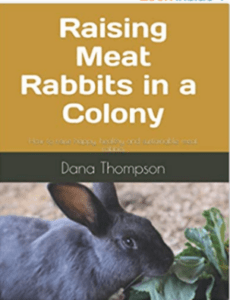
Available on Kindle and in paperback or from our store
Please Pin and Share!





Hi, i would like to raise a colony on raised brick High beds that are hugelculture( logs at the bottom, twigs, then compost, with a layer of wood chips on top, and welded wire on the very bottom, covered with an adapted chicken run). The beds are 12 metres long and 4 feet wide, there are 3 beds and they are all connected at the top so that the bunnies can run around all of them. It’s kind of a deep litter system. My question is: with two females and a buck, with their respective litters, how long do you think I could keep them on these beds until I need to move them to another set of beds? I would also plant the beds with forage for them to eat. Is this a viable idea? I’m not sure whether the poop will be manageable or whether I’ll née to cover any poop with more woodchips. Any advice welcome.
Hi, I have found this really useful, thank you. We are designing a shed with an outdoor area. My biggest quandary us what variety of rabbit to grow for meat? We cant seem to access NZ Whites here in Christchurch. Can you eat minilops? Do they grow quickly enough?
There are definitely breeders in chch if you know where to look. Californians are another option – we got our initial calis from chch.Mini lops are a waste of time for meat, they are like eating rats. You want something that will hit 2kg in 12 weeks.
Try asking in one of these two groups: https://www.facebook.com/groups/202929733593727/ or https://www.facebook.com/groups/251669428359892/ Satins are often suggested as a good breed, but in NZ our satins don’t get to the bigger sizes that the US satins seem to. NZ whites are your best bet, californians would be my second choice. Good luck!
Thank you for sharing your knowledge. I too have been thinking about raising rabbits in a colony. We have some in hitches now but I can see how much better it could be in a colony.